
As the autumn air turns crisp, daylight fades earlier, and dried leaves crunch underfoot, a subtle transformation takes place across the New York landscape. While the human world settles in for the night… our nocturnal neighbors wake up to take over the forest!
In the spirit of the season, we often associate October nights with monsters and eerie rustles in the dark… But the true phantoms of New York's woodlands aren't ghosts, they are our elusive nocturnal mammals! 👻
Why Rule the Night? The Science Behind Nocturnal Adaptations
Why do so many mammals prefer operating in pitch darkness? Evolutionary biologists call it the "nocturnal bottleneck hypothesis.” Millions of years ago, early mammals adapted to night life to avoid diurnal predators like dinosaurs and large daytime raptors. Today, remaining active after dark offers major advantages: it allows mammals to avoid heat stress, reduce competition for food with daytime species, avoid human disturbance, and hunt or forage under the protective cloak of darkness. Many of New York's native mammals possess remarkable adaptations for navigating and hunting under the cover of pitch-black darkness.
Here are five fascinating creatures lurking in our state's forests after hours:
1. Flying Squirrels (Glaucomys volans & Glaucomys sabrinus)
The ghosts of the canopy: New York is home to both Southern and Northern Flying Squirrels, though most residents have never seen either! While eastern gray squirrels rule the daytime, these small, strictly nocturnal cousins glide through the dark treetop canopy unnoticed. With oversized, pitch-black eyes adapted for night vision, they leap from high branches and sail through the air for over 100 feet using skin membranes stretched between their legs. Unless you hear a faint thump against a tree trunk at midnight, you’d never know they were there.
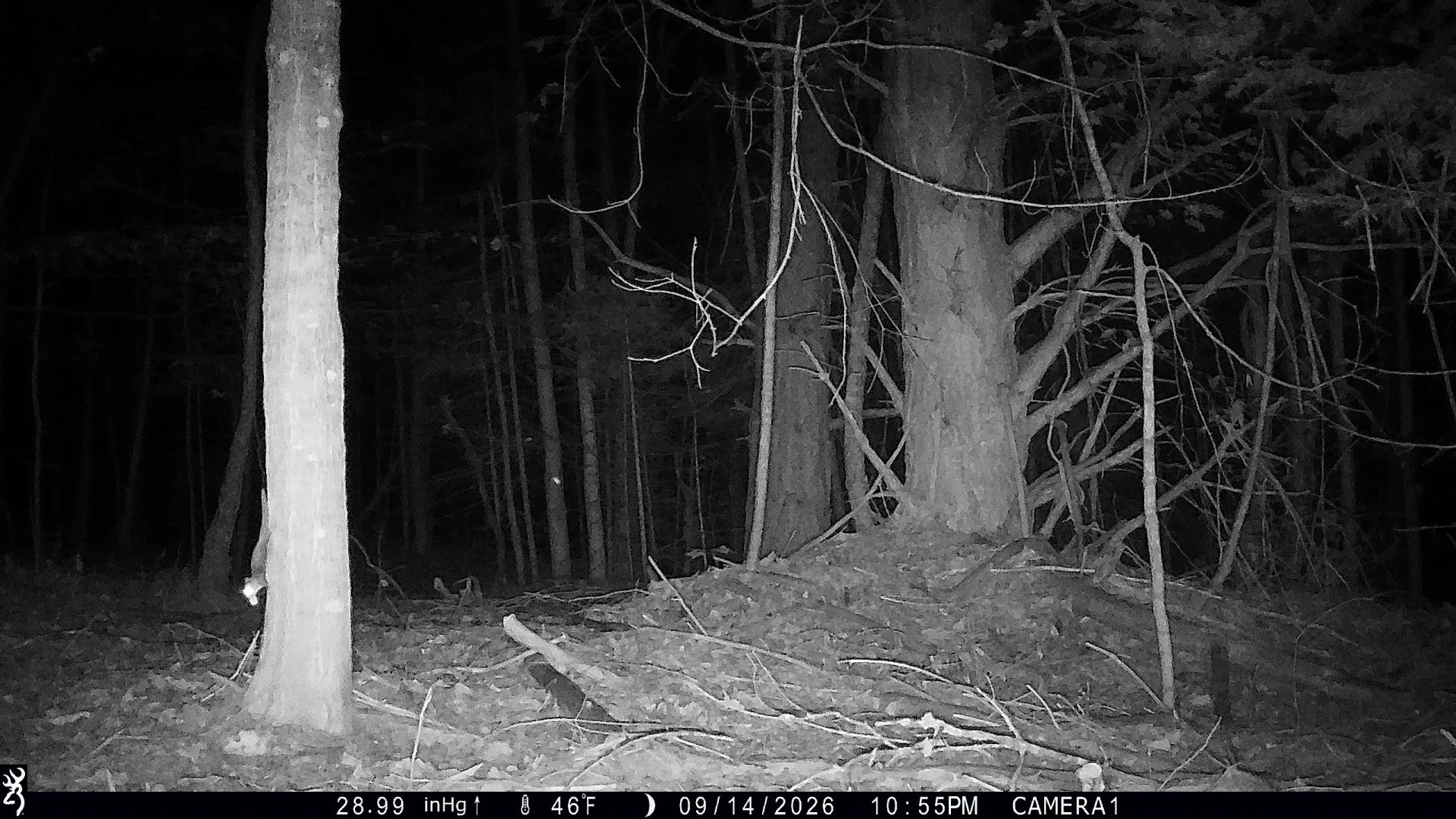
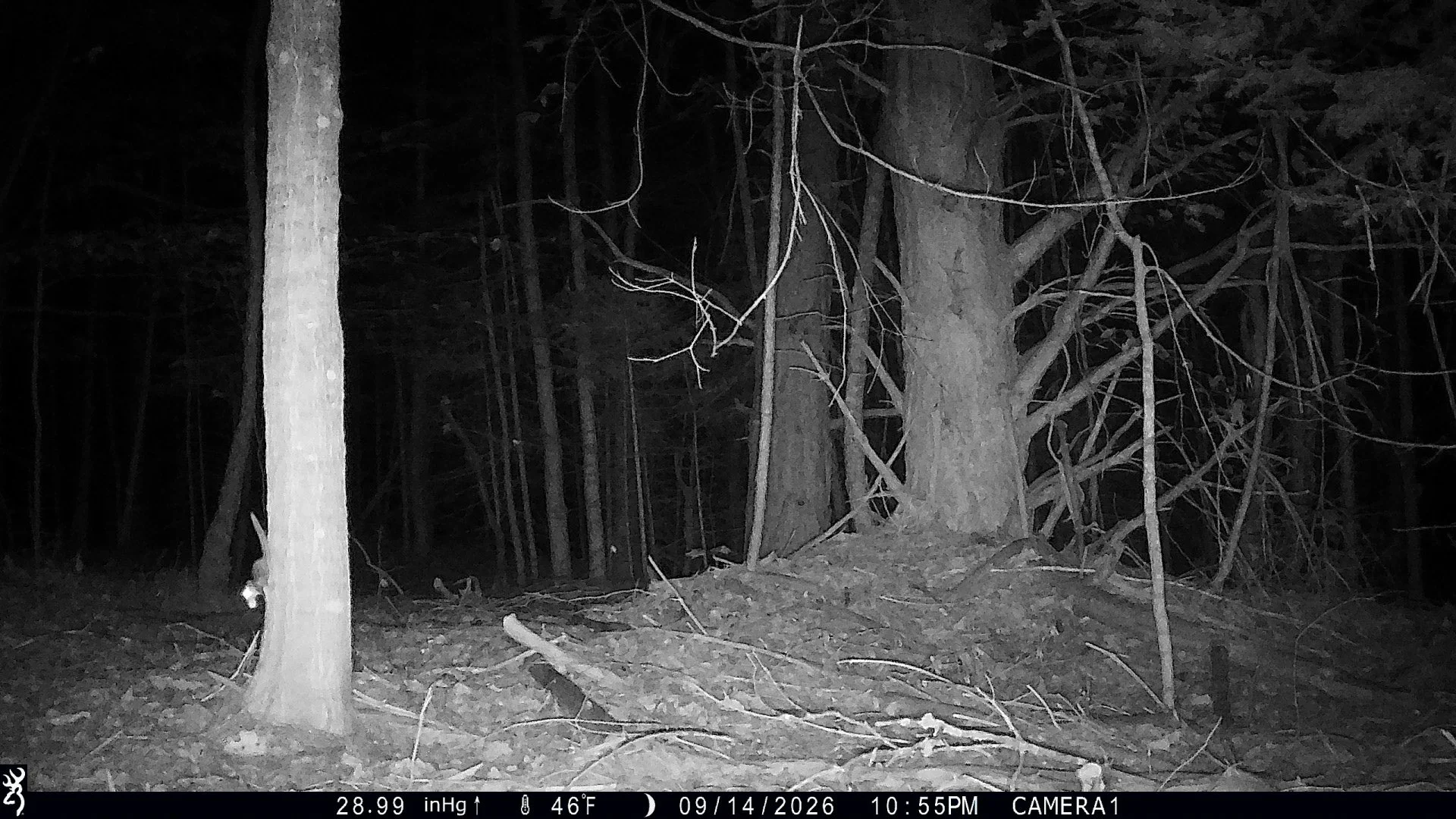
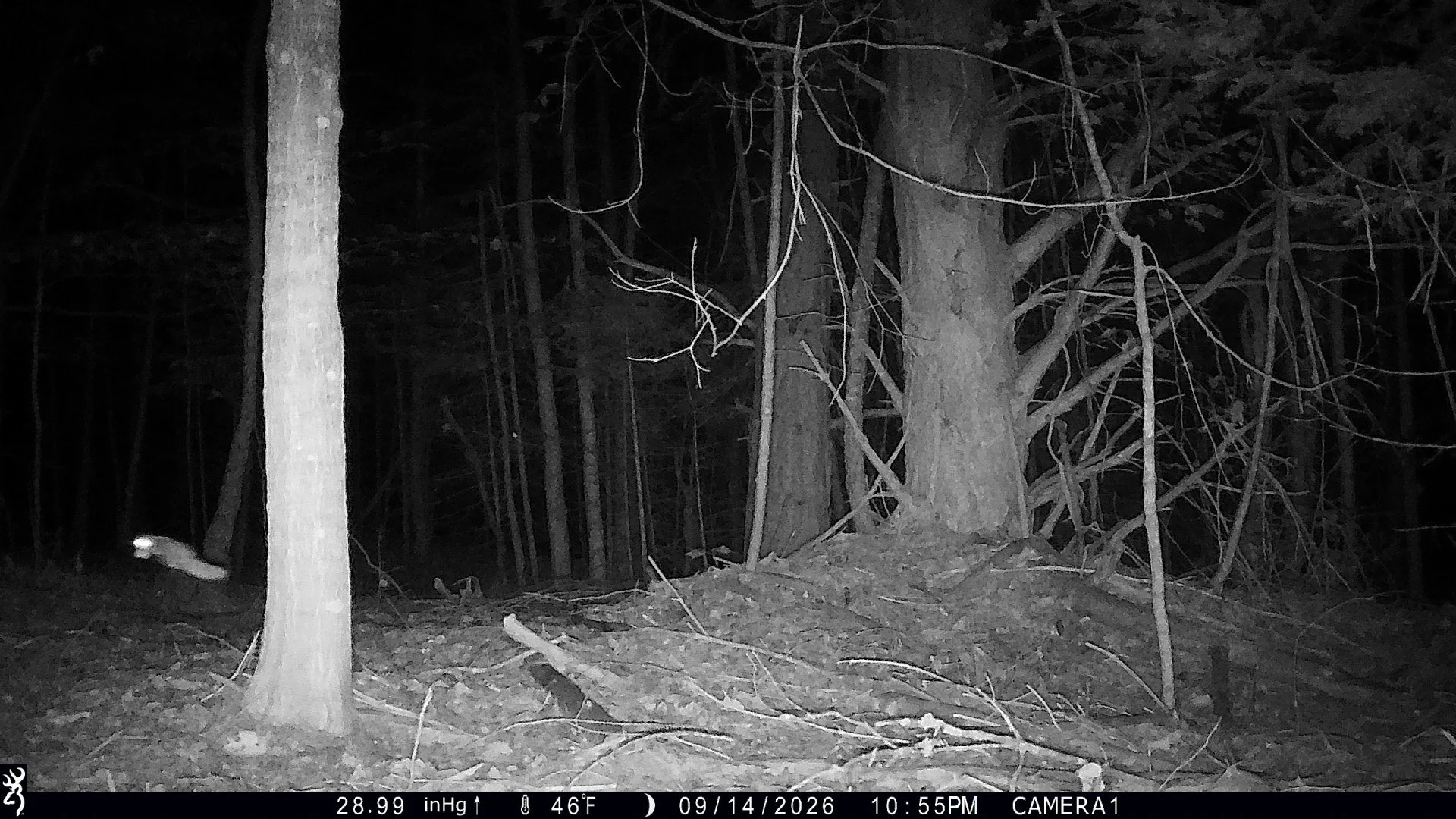
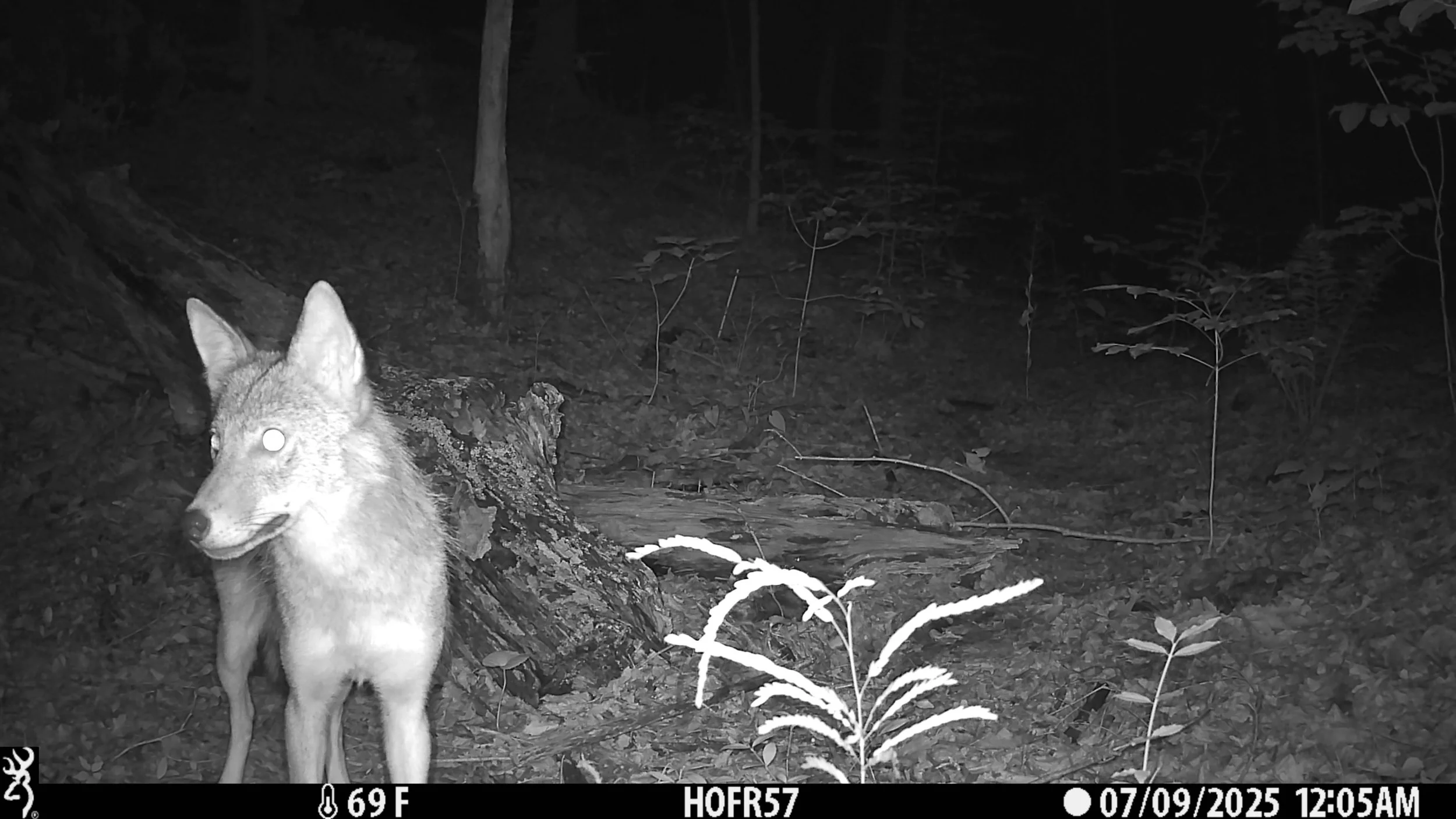
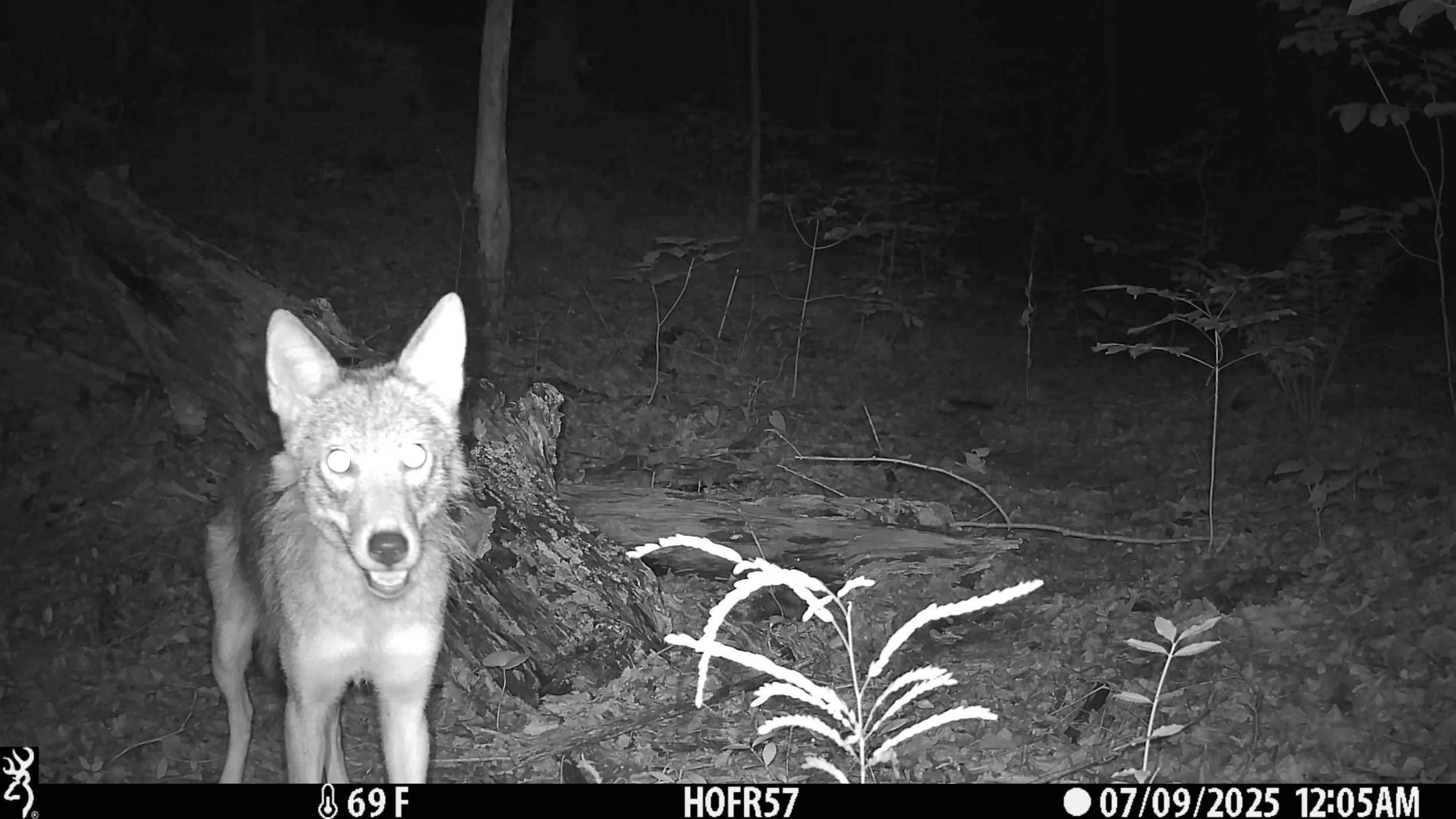
2. The Eastern Coyote (Canis latrans)
The howling phantom of the woods: Nothing evokes a spine-tingling Halloween atmosphere quite like a lonely howl echoing across a moonlit valley. Highly adaptable and intelligent, eastern coyotes are primary night prowlers across New York’s rural forests and suburban fringes alike. Using their keen sense of smell and large ears, they move like shadows through the brush, hunting small mammals or scavenged meals while expertly avoiding human contact.
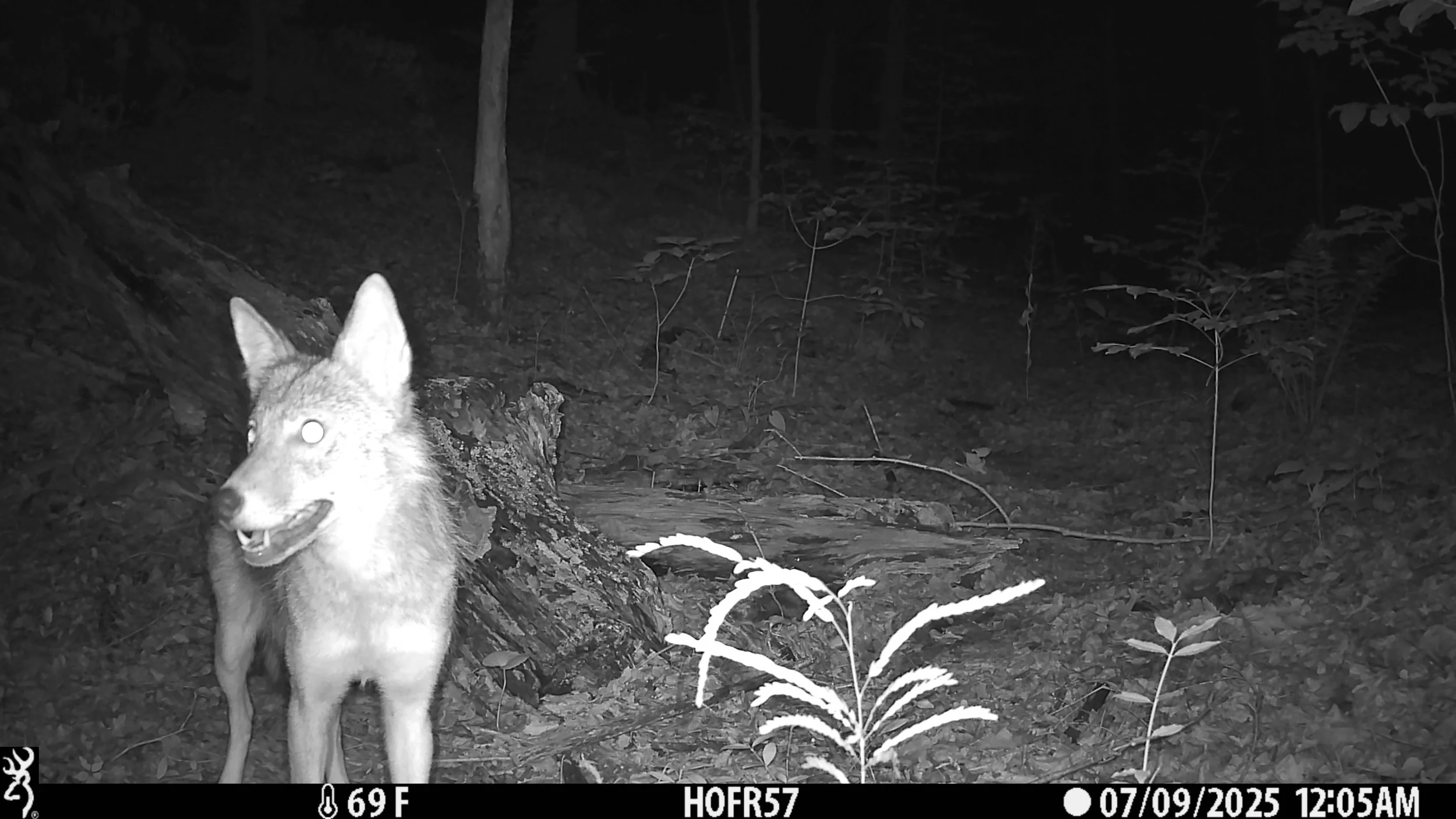
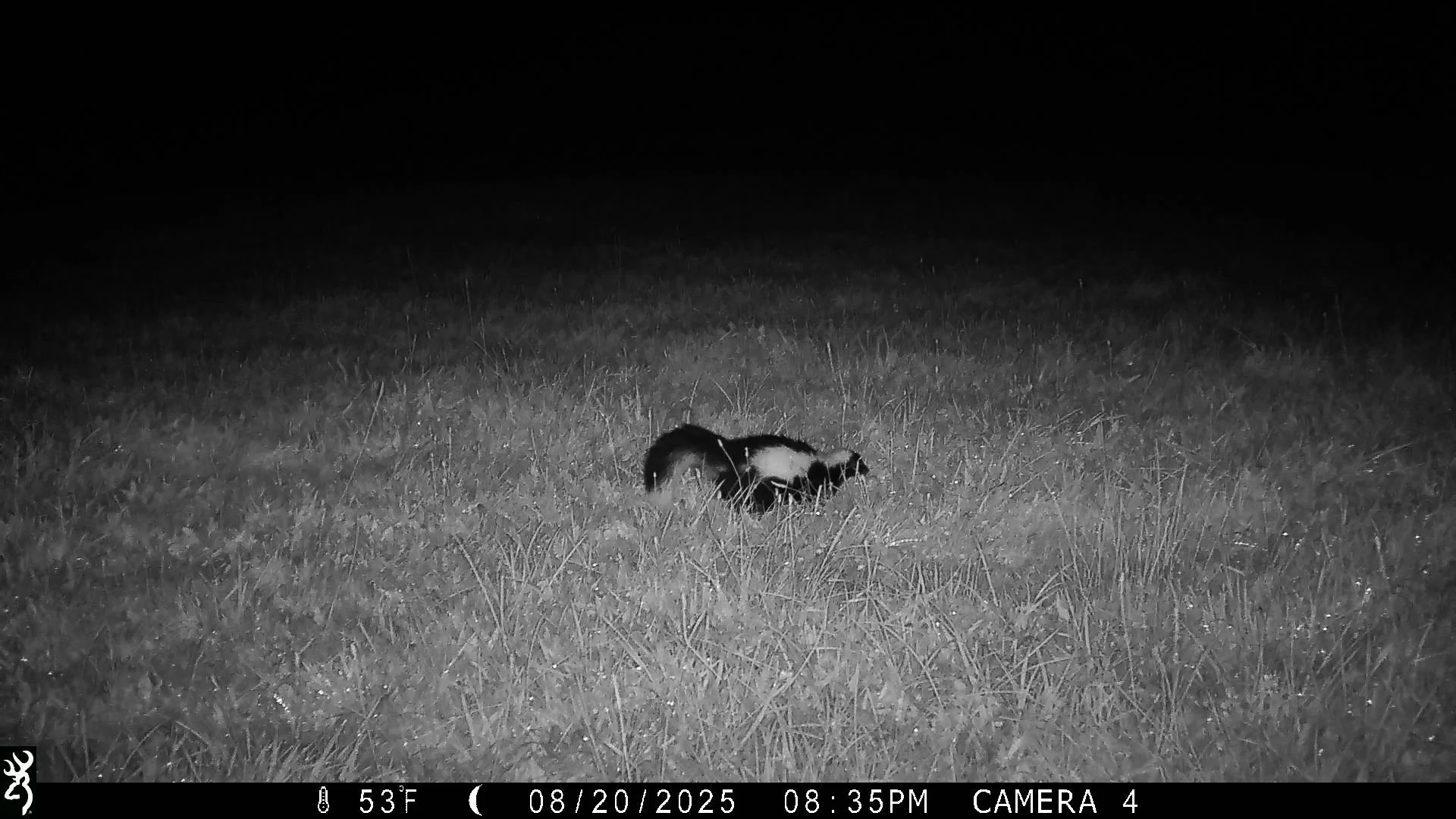
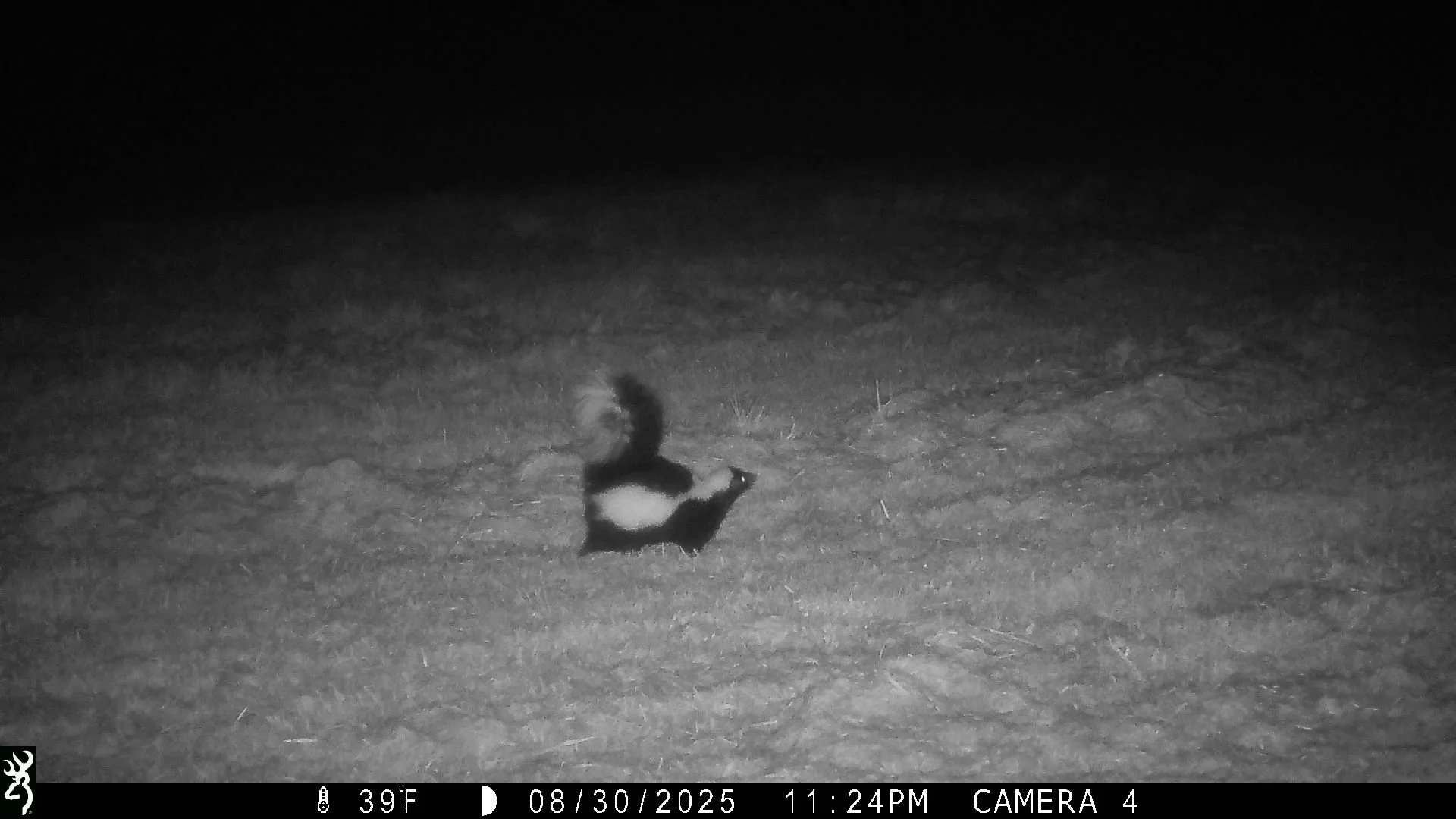
3. The Striped Skunk (Mephitis mephitis)
The midnight master of defense: Cloaked in stark black and white, a classic warning coloration known as aposematism, the striped skunk is one of October’s most recognizable nocturnal wanderers. Armed with a noxious defensive spray that can leave a lasting scent for weeks, skunks fearlessly forage under the dark sky for grubs, insects, berries, and small rodents, relying on their distinct pattern to ward off prospective night predators.
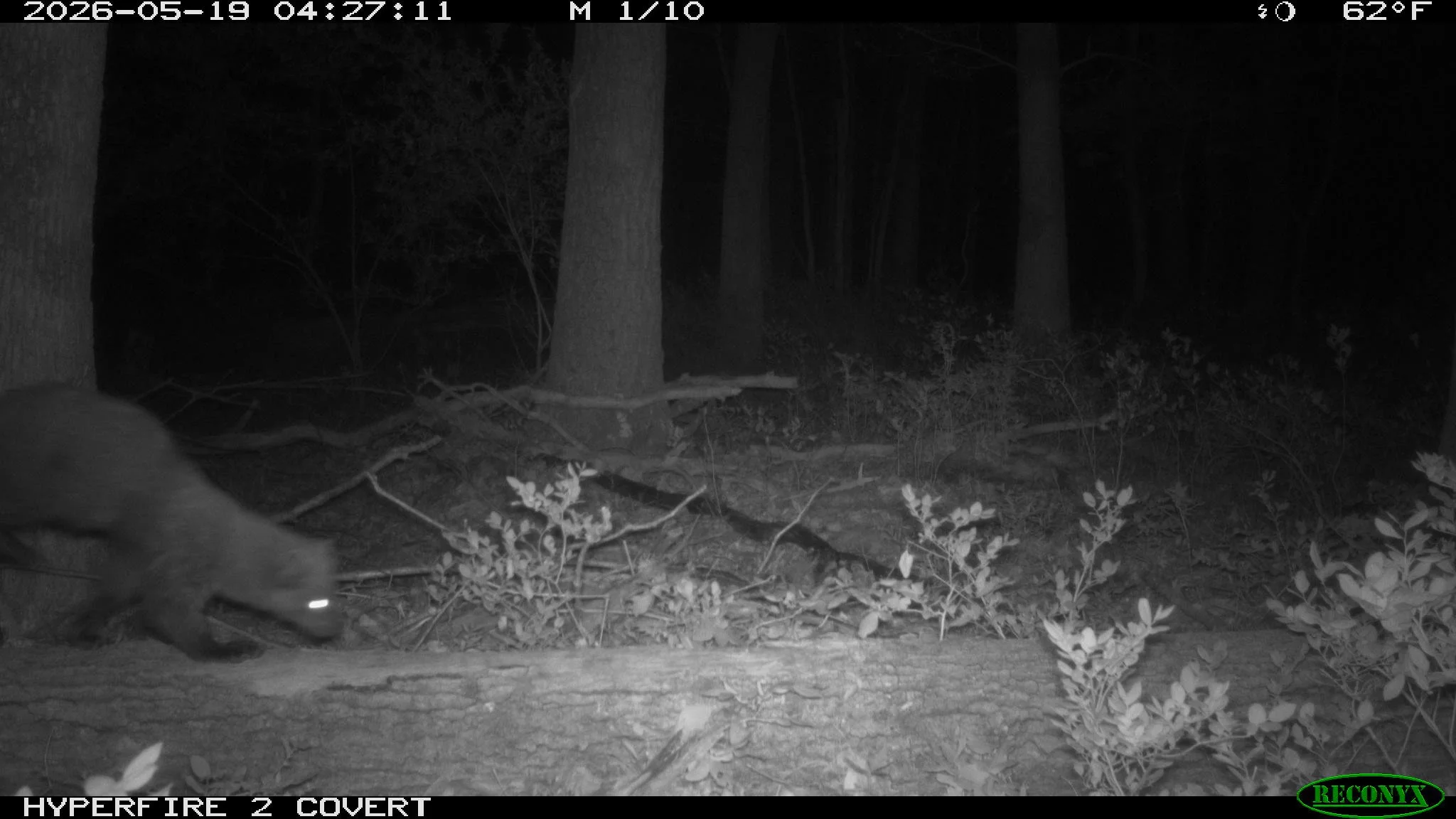
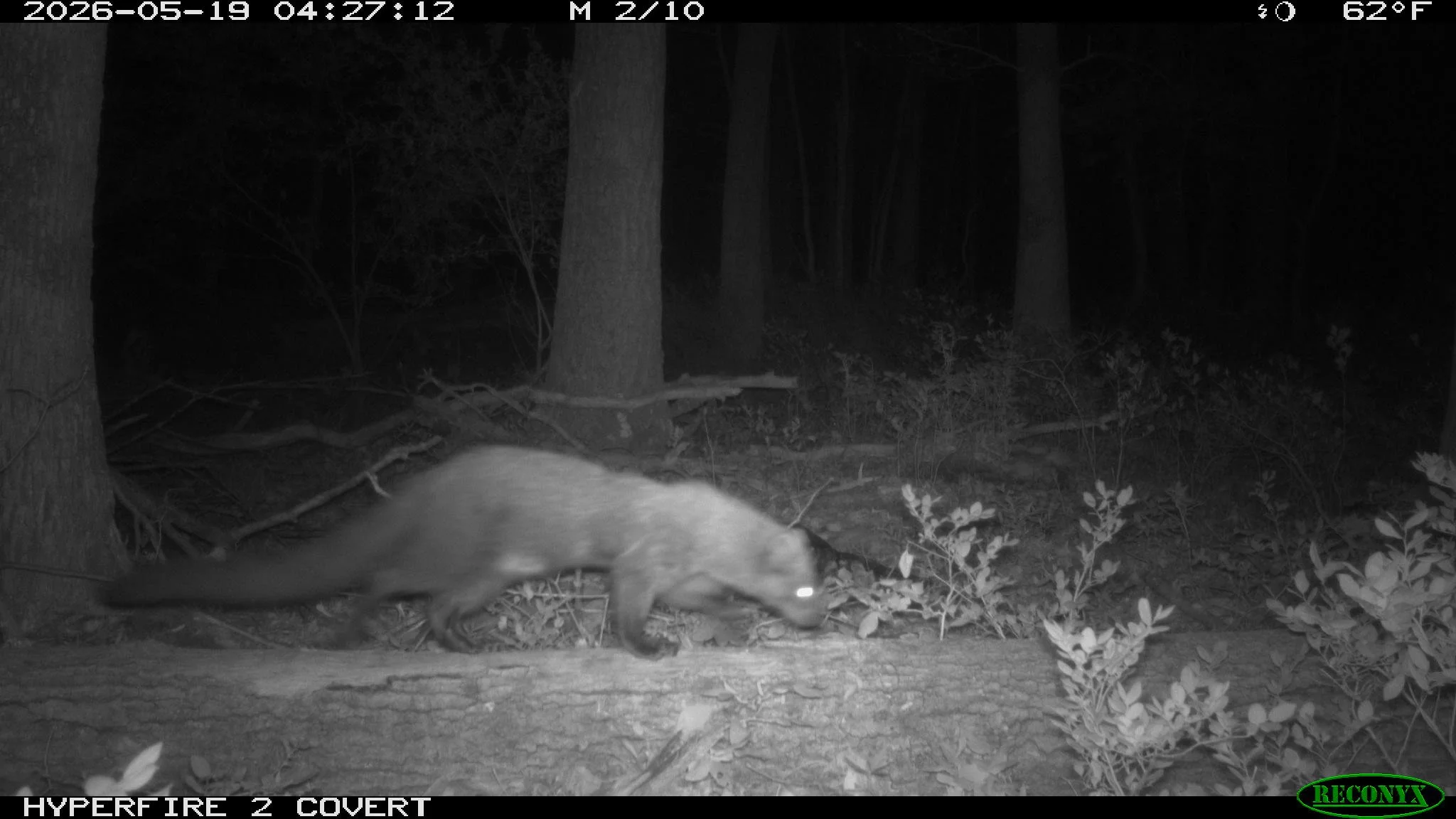
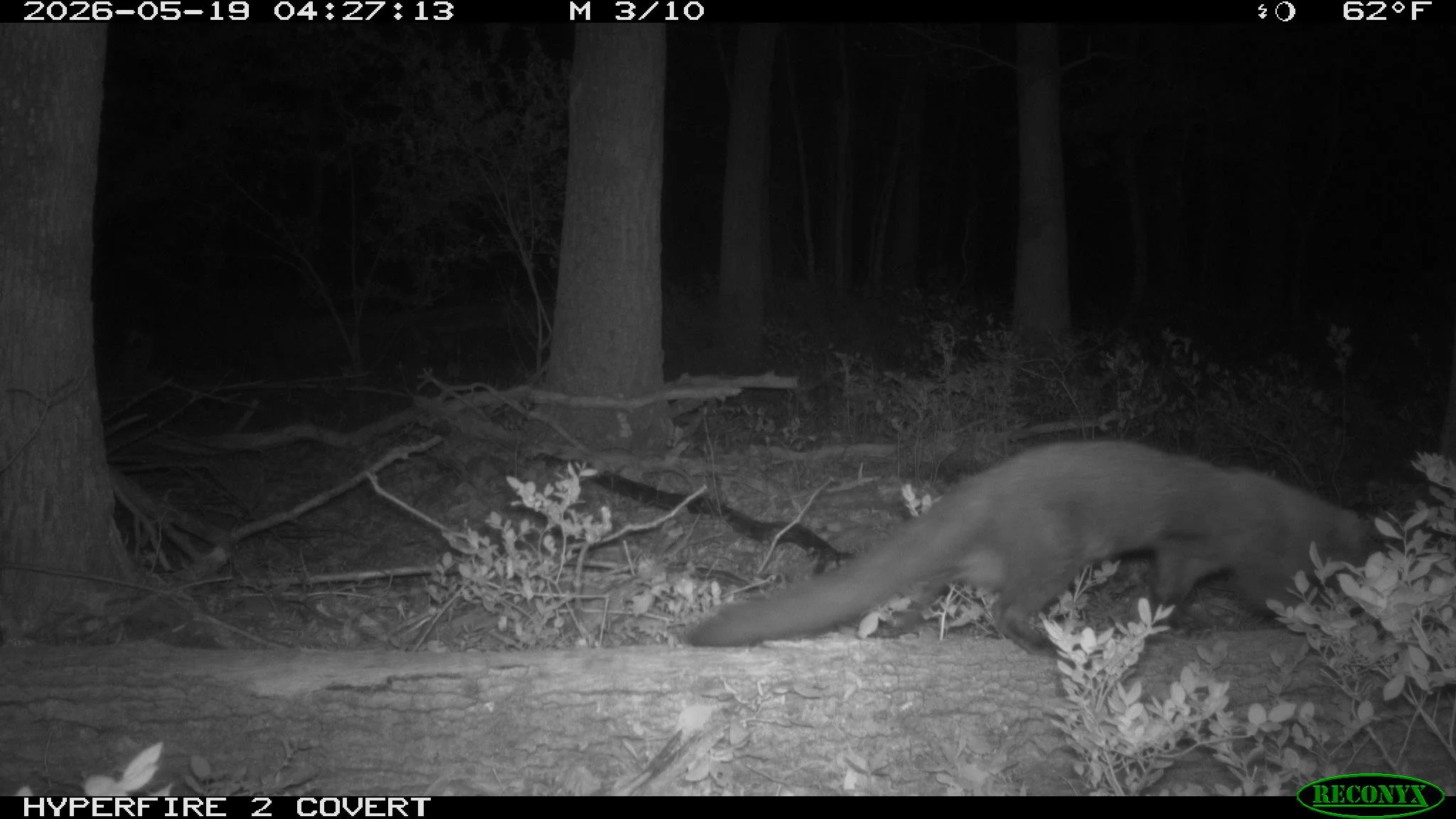
4. The Fisher (Pekania pennanti)
The hunter in the shadows: Few animals carry a reputation as shrouded in myth as the fisher. Many attribute the “screams” they hear in the night to these guys, but more likely they are hearing a red fox (check out our previous blog about sounds of the night)!
A large, secretive member of the weasel family, the fisher prowls mature northern and mixed forests primarily between dusk and dawn. Known for its dark coat, agility, and piercing gaze, it is one of the few predators fierce enough to hunt porcupines. Their stealthy, solitary nature makes a face-to-face daylight encounter quite rare!
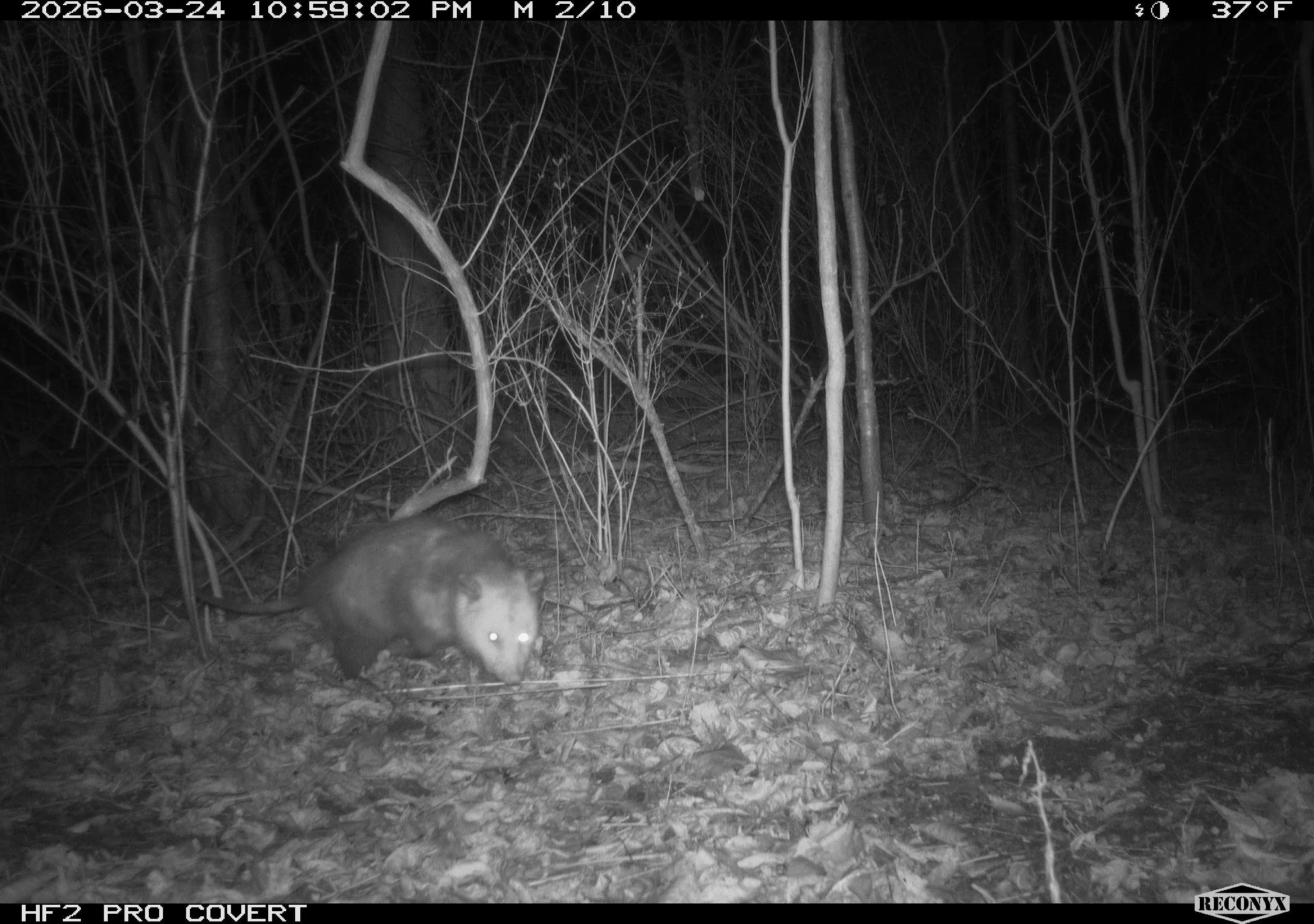
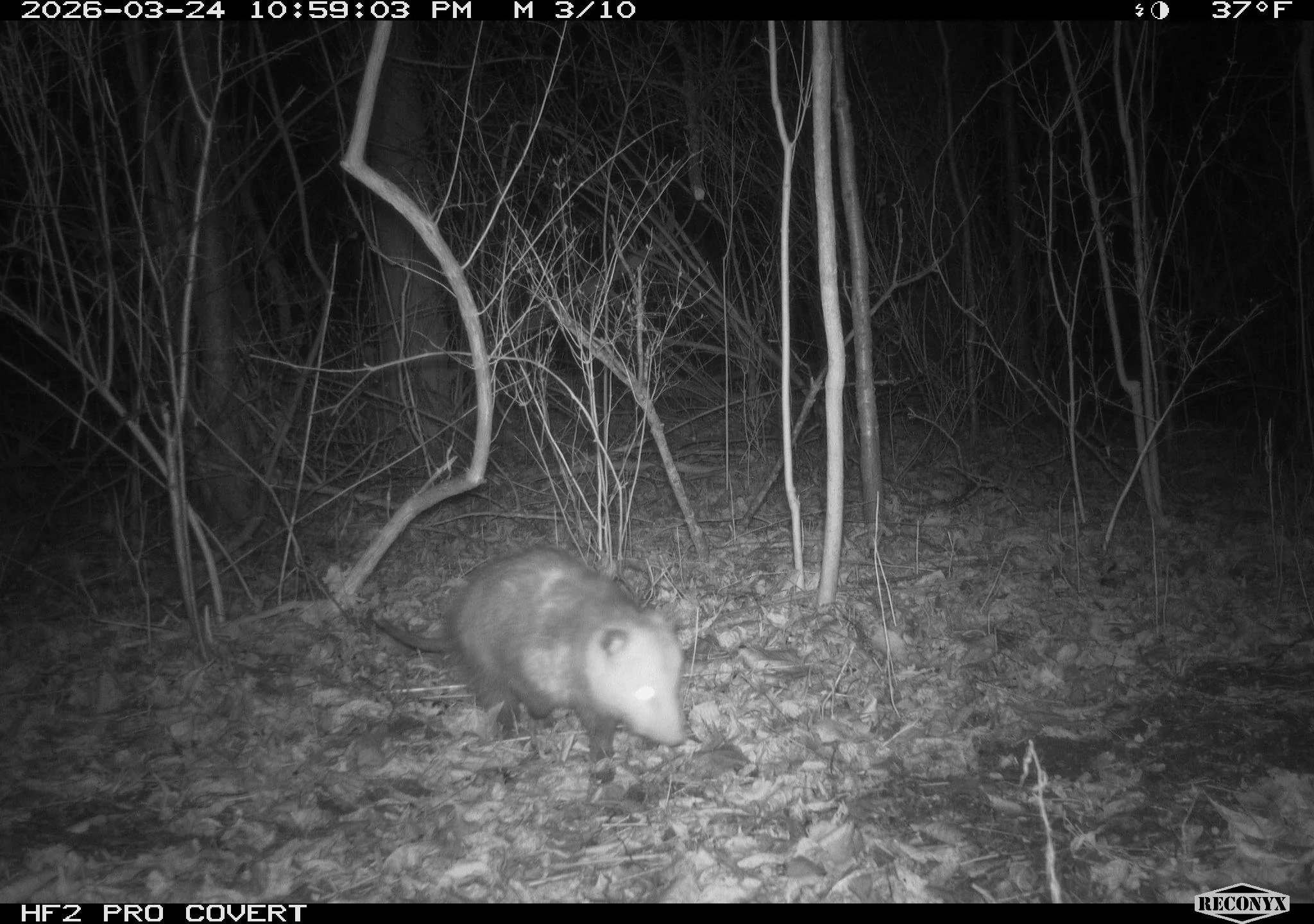
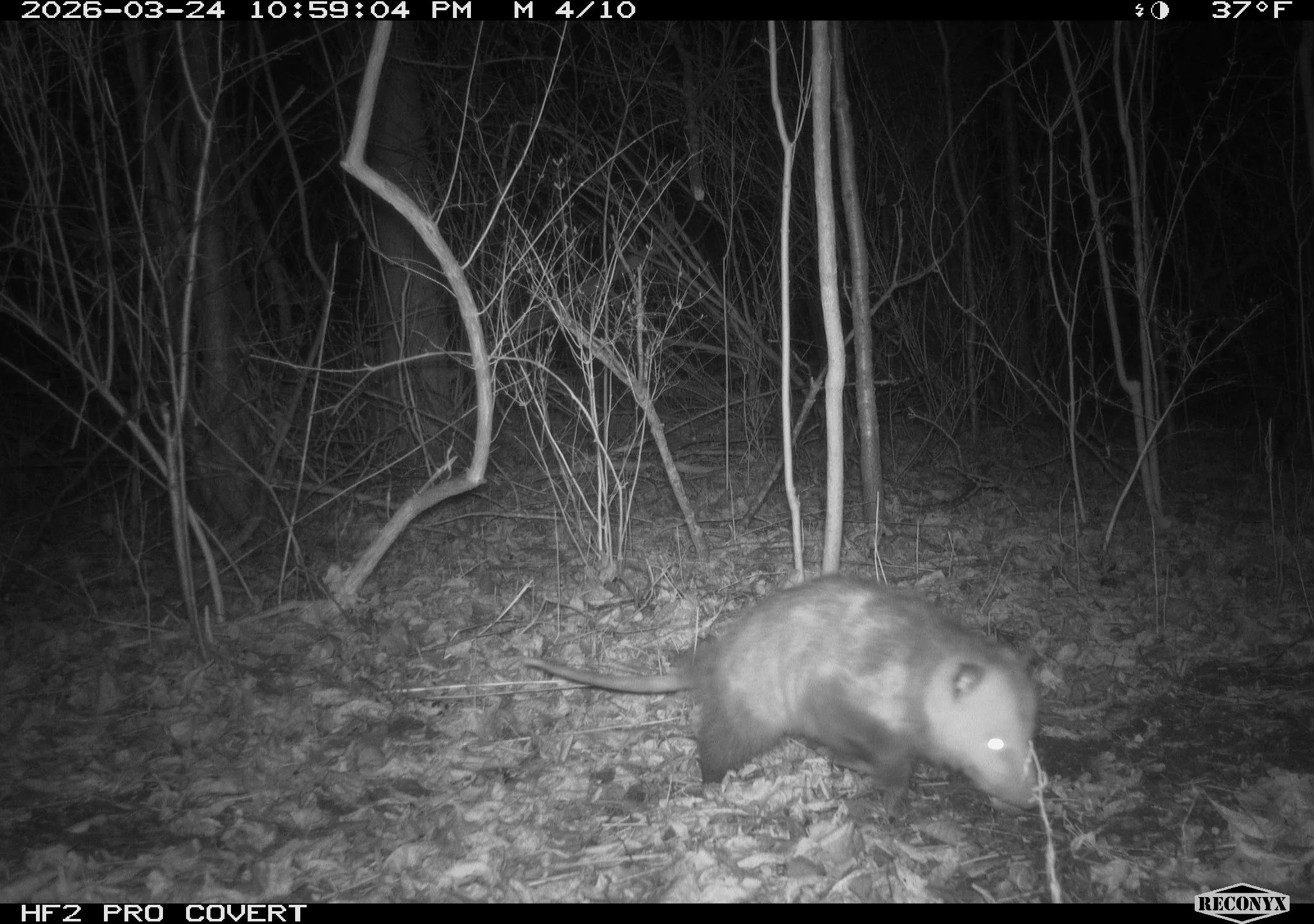
5. The Virginia Opossum (Didelphis virginiana)
The night shift clean up crew: America’s only marsupial looks like it stepped right out of a Halloween story. With its stark white face, hairless prehensile tail, dark eyes, and a mouth filled with 50 sharp teeth, the opossum is a classic midnight wanderer. Despite its spooky appearance, this gentle omnivore acts as the forest’s ultimate clean-up crew, eating fallen fruit, carrion, and thousands of insects every season.
Shining a Light on the Dark: How Trail Cameras Changed the Game
For centuries, nocturnal mammals lived largely in secret. Early naturalists had to rely on indirect clues like tracks in the mud, chewed bark, scat, or distant calls in the dark to guess what animals roamed after dusk. Observing night-active wildlife directly was almost impossible without disturbing their natural behaviors with flashlights or loud equipment.
Enter the modern trail camera!
Equipped with infrared night vision and passive infrared (PIR) motion sensors, trail cameras act as silent, tireless eyes in the woods. Infrared illumination allows cameras to capture crisp black-and-white photos without emitting a bright visible flash that would startle an animal or alter its natural path.
Through Snapshot NY, these remote camera setups are giving us unprecedented insight into New York's nocturnal ecosystems:
Unmasking Elusive Species: Animals like flying squirrels, coyotes, skunks, and fishers that actively avoid humans during daylight hours are captured engaging in routine behaviors like foraging, marking territory, and raising young.
Activity Patterns & Timing: By logging timestamped captures, we can map out exact temporal niches. We can observe how animal activity may potentially shift from crepuscular (dusk/dawn) to strictly nocturnal as human activity nearby increases.
Population Monitoring: Clear nocturnal imagery allows biologists to track species distribution, seasonal movements, and population health across New York State's diverse habitats year-round.
Keep an Eye on the Dark!
Next time you step outside on an autumn evening and hear a rustle in the leaf litter or catch a pair of glowing eyes reflecting in the distance, remember that our state’s forests are far from empty at night.
Thanks to our dedicated Snapshot NY volunteers and their trail camera deployments, the shadows are revealing their secrets one frame at a time!
Happy Halloween, and happy camera trapping! 🦇🧟♀️🎃📸