
A Participatory Science Project Monitoring Wildlife in New York
Snapshot NY allows anyone across the state to host a trail camera, providing critical data on wildlife population status, trends, and distribution. Our goal is to harness the power of people to improve wildlife conservation and management strategies.
All you need is a trail camera (your own or borrow one) access to private lands (or permission for public lands), the ability to download our app, and upload photos through our website!
Scroll down to our map below to see if you grid cell is available!


Help us study the mammals of New York!
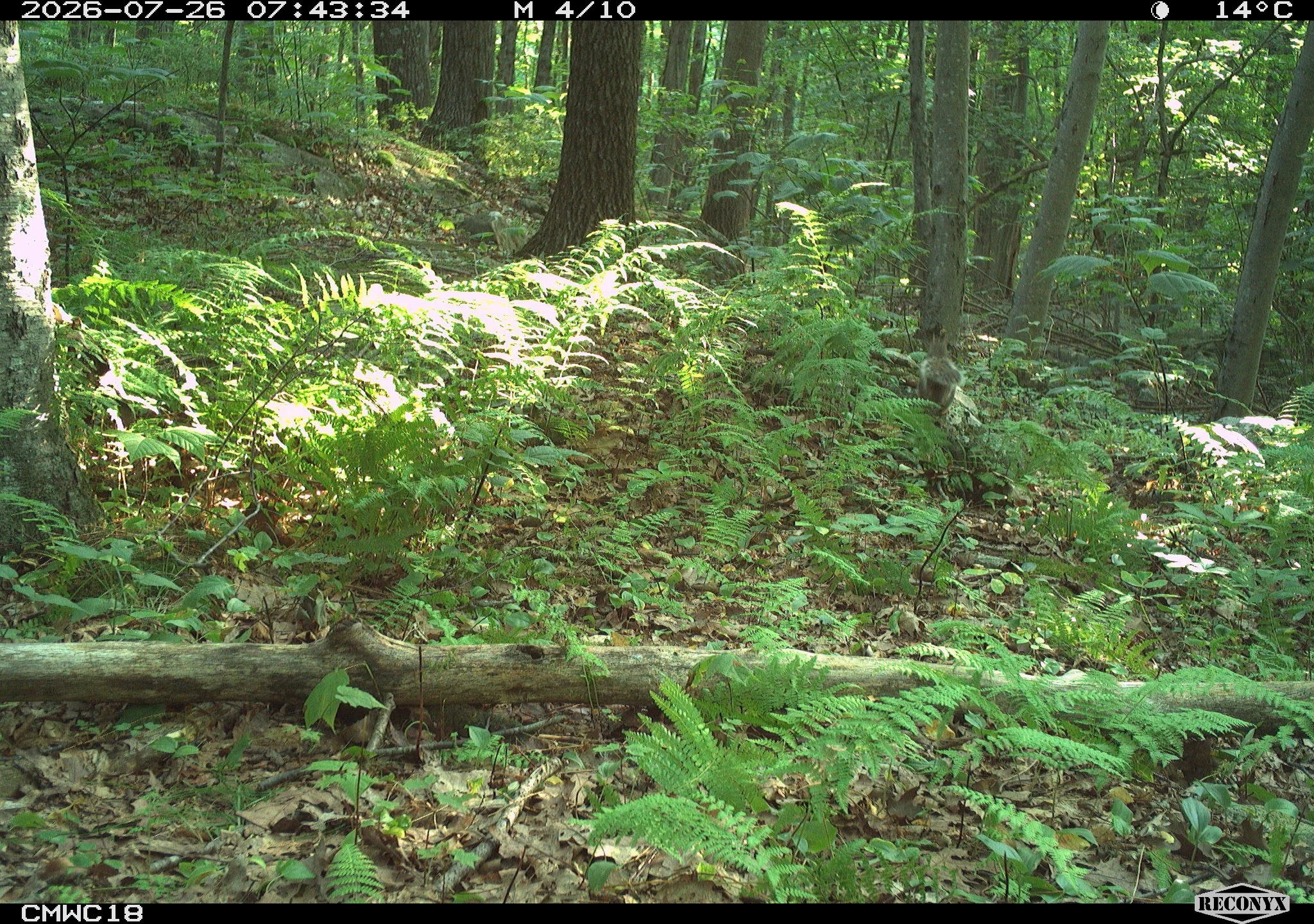
Snapshot NY uses trail camera images to capture the shy and elusive mammal species in New York that you may not see otherwise! These trail camera images provide crucial data and information on these mammal species which allows us to inform evidence-based decision making and management.


Building an engaged community of participatory scientists in New York
Snapshot NY is designed to inspire residents of New York to be interested and involved in the wildlife species that inhabit our state. We provide a unique opportunity for groups, individuals, families, and students from all walks of life to get involved and contribute meaningfully to monitoring New York's incredible wildlife!


Check to see if your grid cell is available
897 volunteers
🐾
1057 active grid cells
🐾
14 million photos submitted!
🐾
897 volunteers 🐾 1057 active grid cells 🐾 14 million photos submitted! 🐾

FAQs
-
Snapshot NY is a collaborative project between the NYSDEC, Cornell University, and volunteers from across NYS! Anyone can become a citizen scientist and be a part of Snapshot NY! Our project works on a grid-based system where volunteers can select the grid cell where they live to survey for wildlife using trail cameras.
Create a Snapshot NY account here, sign up for a grid cell and request a camera loan if you need one (limited availability). Download the app onto your smartphone to record important information about your trail camera deployment, and use the website account portal to submit images. Please refer to our protocols on the resources page for full instructions.
Do these things and you'll be on your way to being a part of wildlife research when you take Snapshot NY with you outdoors!
-
Absolutely! Snapshot NY is interested in where people do not see wildlife too! If you spend time outdoors anywhere in New York State and have legal access to set up a trail cam on private land, then you can be a citizen scientist for Snapshot NY. Snapshot NY is for outdoor and nature enthusiasts who are interested in seeing what wildlife is in their area! You can also help by spreading the word to your friends, neighbors, and community members.
If you don’t have access to private lands - that’s okay! You can still participate by setting up a camera at your nearest state forest or wildlife management area. Indicate in your application that you want to place a camera on public lands, and a Snapshot NY team member will be in contact with more instructions.
-
This project is a collaboration between Cornell University, the New York State Department of Environmental Conservation (NYSDEC, the state agency that manages wildlife in New York), and the New York Cooperative Fish and Wildlife Research Unit (NYCFWRU). The NYCFWRU is a partnership between the US Geological Survey, the NYSDEC, and Cornell University.
See our about page to meet the team members and our resources page to contact us.
-
Snapshot NY collects data on the presence and absence of mammals and other wildlife through "detection/non-detection data". Detection data refers to when an animal was detected and a photo taken by a trail camera. Non-detection refers to when the camera was functioning, but the species was not detected.
Snapshot NY also needs to know where and when citizen scientists collect this information. This is why it is important to enter an accurate location, date and time for your camera deployments. Questions like "The height of your camera" and "What is the brand of the camera" allow researchers to look at the data in different ways.
-
There are a lot of different cameras on the market, and the technology keeps improving. Cameras typically range between $100- $700, especially after including accessories (batteries, SD memory cards, cable locks, metal boxes). For participating in Snapshot NY, we do not recommend you use a camera under ~$60 as the image quality significantly decreases. Most lines of cameras excel at a few features, so it's important to know what you want from a camera. In our New York research, we find that Browning cameras are a fair compromise between price, function, and quality. Some things to take into consideration are the trigger speed, range of detection, and if you want it to have WiFi or Cell Service capabilities. If you chose to participate in Snapshot NY and would like to purchase a Browning camera, contact us at snapshotny@cornell.edu to receive information about discounted rates!


As October rolls into New York, the days grow noticeably shorter, the air crisp, and the autumn leaves start rustling underfoot. It’s the season of cozy sweaters, pumpkin spice, and…unsettling noises coming from the tree line after sunset.