
Mammals of the Adirondacks
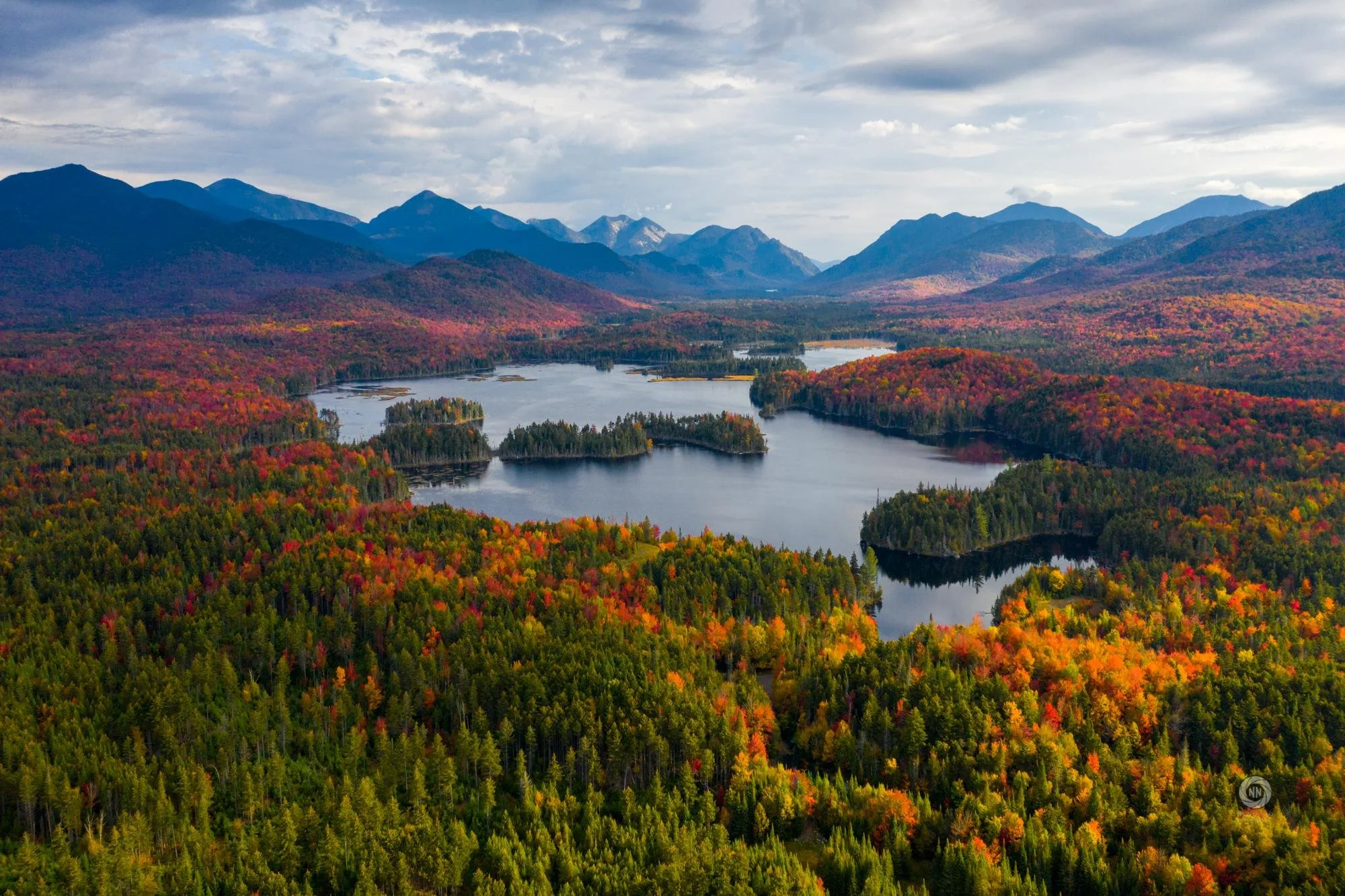
When you say you’re from New York to an out of state-er, their first thought is probably that you live in New York City. Most of us know New York is so much more than that. If there’s one thing NY should be known for, it’s the Adirondacks. There's a reason people travel from across the country (and the world) to stand quietly at the edge of an Adirondack lake at dusk. It's not just the scenery, it’s that feeling that it is truly a remote and wild place.
The Adirondack Park is the largest publicly protected area in the contiguous United States. Six million acres of forests, wetlands, rivers, and mountains. And within that vast, largely intact landscape lives an extraordinary community of mammals. Some species exist here and essentially nowhere else in New York State. Others range more broadly across the Northeast, but find something special in the Adirondacks - space, habitat, and wildness enough to thrive.
Unique to the Adirondacks
Moose: The Giant of the Northern Forest
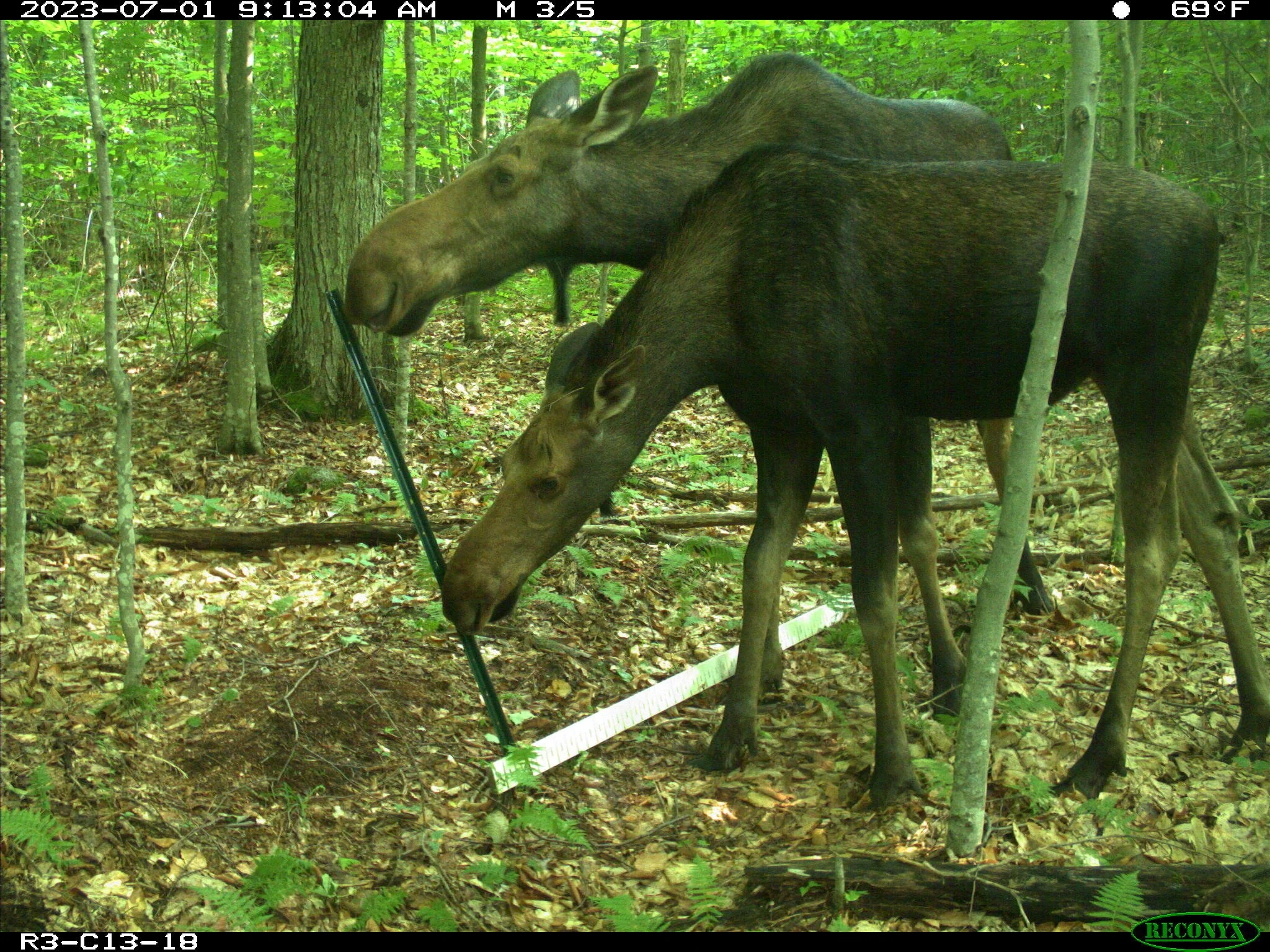
There is nothing quite like encountering a moose (Alces alces) for the first time. Standing over six feet at the shoulder and weighing up to 1,200 pounds, a bull moose browsing at the edge of a wetland is a reminder that the Adirondacks are not a tame landscape.
Moose are the largest land mammal in New York, and the Adirondacks are the only place in the state where you have a realistic chance of seeing one. Their presence here is tied directly to the region's boreal character. The sprawling spruce-fir forests, the cold boggy wetlands, the shallow ponds with aquatic vegetation that moose depend on for food. They are built for deep snow and cold winters, and the North Country delivers both.
New York's moose population is small and centered in the Adirondacks and the Tug Hill Plateau. Climate change is an increasing concern: warmer winters allow winter ticks to survive in greater numbers, and heavy tick loads (sometimes hundreds of thousands on a single animal) can weaken and kill moose, particularly calves. There are also pressures from other diseases and parasites such as brain worm and giant liver flukes. What happens to the Adirondacks' forest and climate will directly determine whether moose remain part of New York's wildlife story.
Read more about moose in the ADKs here: https://www.adirondackexplorer.org/environment/wildlife/adirondack-moose-population-threatened-but-stable/
American Marten: Back From the Brink
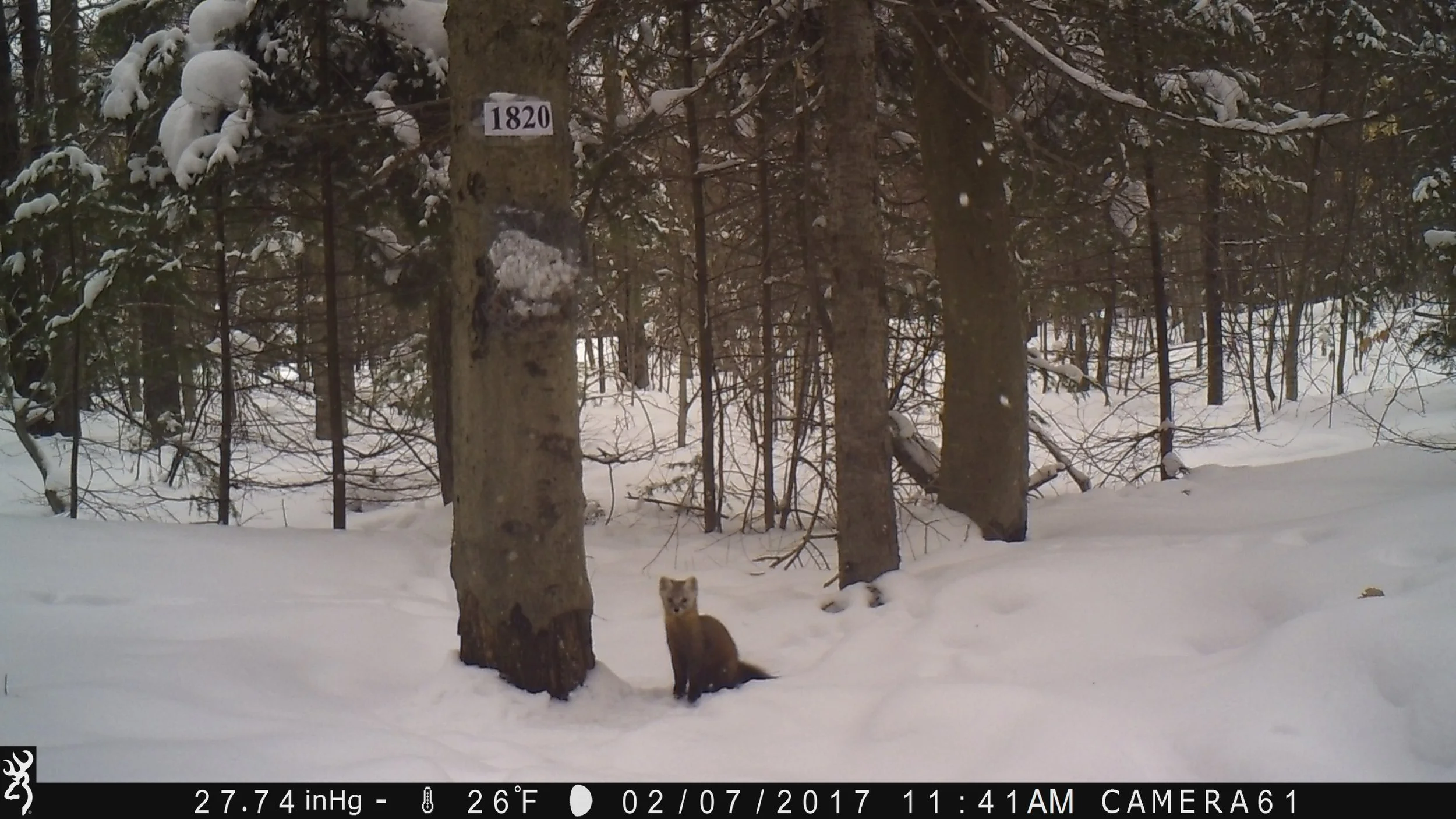
By the early 20th century, the American marten (Martes americana) had been entirely wiped out in New York through decades of unregulated trapping and widespread logging. The recovery of mature, closed-canopy Adirondack forest, and more regulated trapping made reintroduction possible, and today, a small but established population has taken hold again in the park. They appear to be most abundant in the high peaks, but occur through most of the park. Very few, if any exist outside of the Adirondack park.
Martens are sleek, fast members of the weasel family, roughly the size of a house cat. They hunt squirrels, voles, and birds through dense forest interiors, and they are exacting in their habitat requirements: old-growth or structurally complex forest with fallen logs, thick canopy cover, and reliable winter snowpack. They are so sensitive to fragmentation that even a cleared road or a patch of open land can function as a barrier.
Their return is a genuine conservation success story, and a cautionary one. The Adirondack marten population remains small and vulnerable. Its long-term survival depends on the continued health of the park's most remote and undisturbed forests.
Fun fact: this is my personal favorite mammal we have in NY 😀
Snowshoe Hare: The Adirondacks' Hidden Keystone
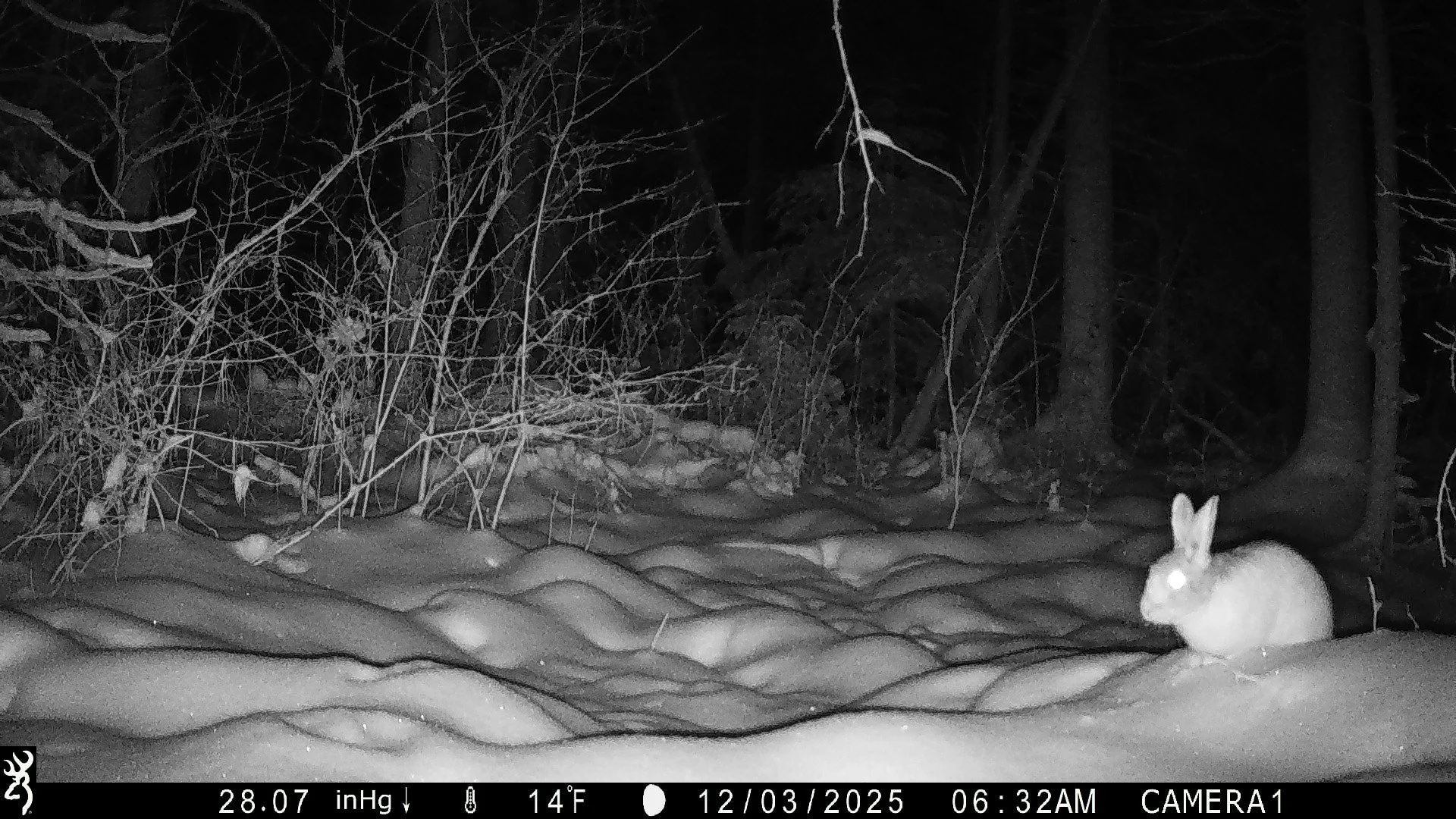
The snowshoe hare (Lepus americanus) doesn't get the attention that moose and marten receive, but it may be the most ecologically important mammal in the Adirondacks. Nearly every predator in the region - marten, fisher, bobcat, coyote, great horned owl, red fox — relies on snowshoe hares as a food source. They are the engine that keeps the northern forest food web running.
Snowshoe hares are named for their oversized hind feet, which allow them to move efficiently across deep snow, and for their remarkable seasonal camouflage: brown in summer, white in winter. In New York, they are largely restricted to the dense boreal and mixed forests of the Adirondacks, where the combination of thick softwood cover and reliable snow makes survival possible.
Their populations naturally boom and bust on roughly ten-year cycles, and when hare numbers crash, the effects ripple outward through the entire predator community. Protecting the Adirondacks' continuous forest habitat is, in a very real sense, protecting the foundation that every other predator in the park depends on.
Higher population numbers in the Adirondacks
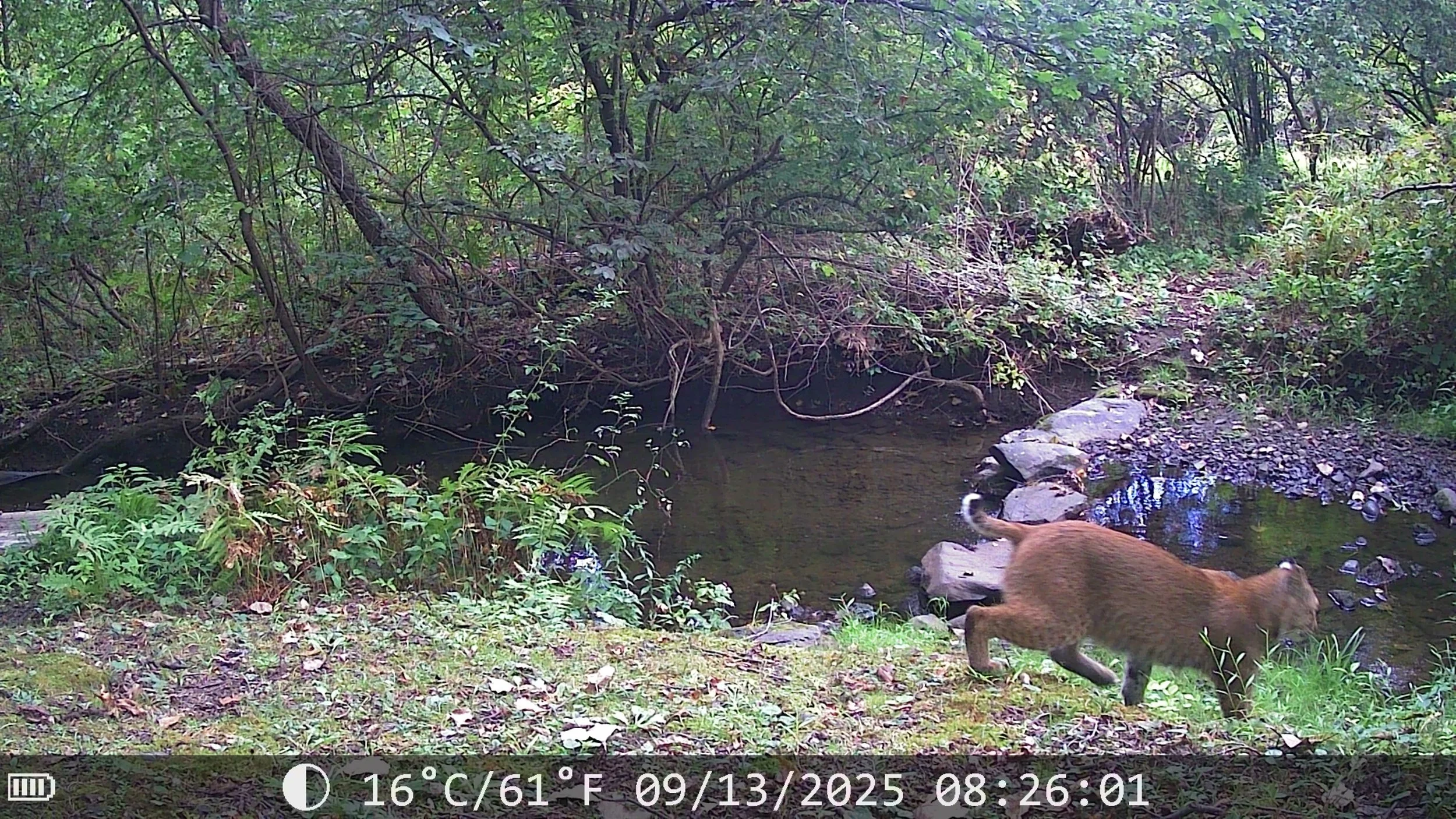
Bobcat: The Patient Stalker
Bobcats (Lynx rufus) are found across much of New York State, but they reach some of their highest densities in the Adirondacks, where the combination of large forest blocks, abundant prey, and limited human disturbance creates ideal conditions. Rarely seen but widely present, bobcats hunt snowshoe hares, white-tailed deer, and small mammals across a surprisingly large home range. Bobcats are famously secretive. Most people who spend years hiking the Adirondacks never see one, but you can see sign of them. Their tracks are round, roughly two inches wide, with no claw marks since their claws retract like a domestic cat's, are often the only evidence they leave behind in winter snow.
In a fragmented landscape, bobcats struggle. Roads increase mortality, development reduces prey availability, and isolated forest patches can't support viable populations. The Adirondacks' scale and connectivity give bobcats room to do what they evolved to do - range widely, hunt effectively, and raise young in remote den sites without interruption.
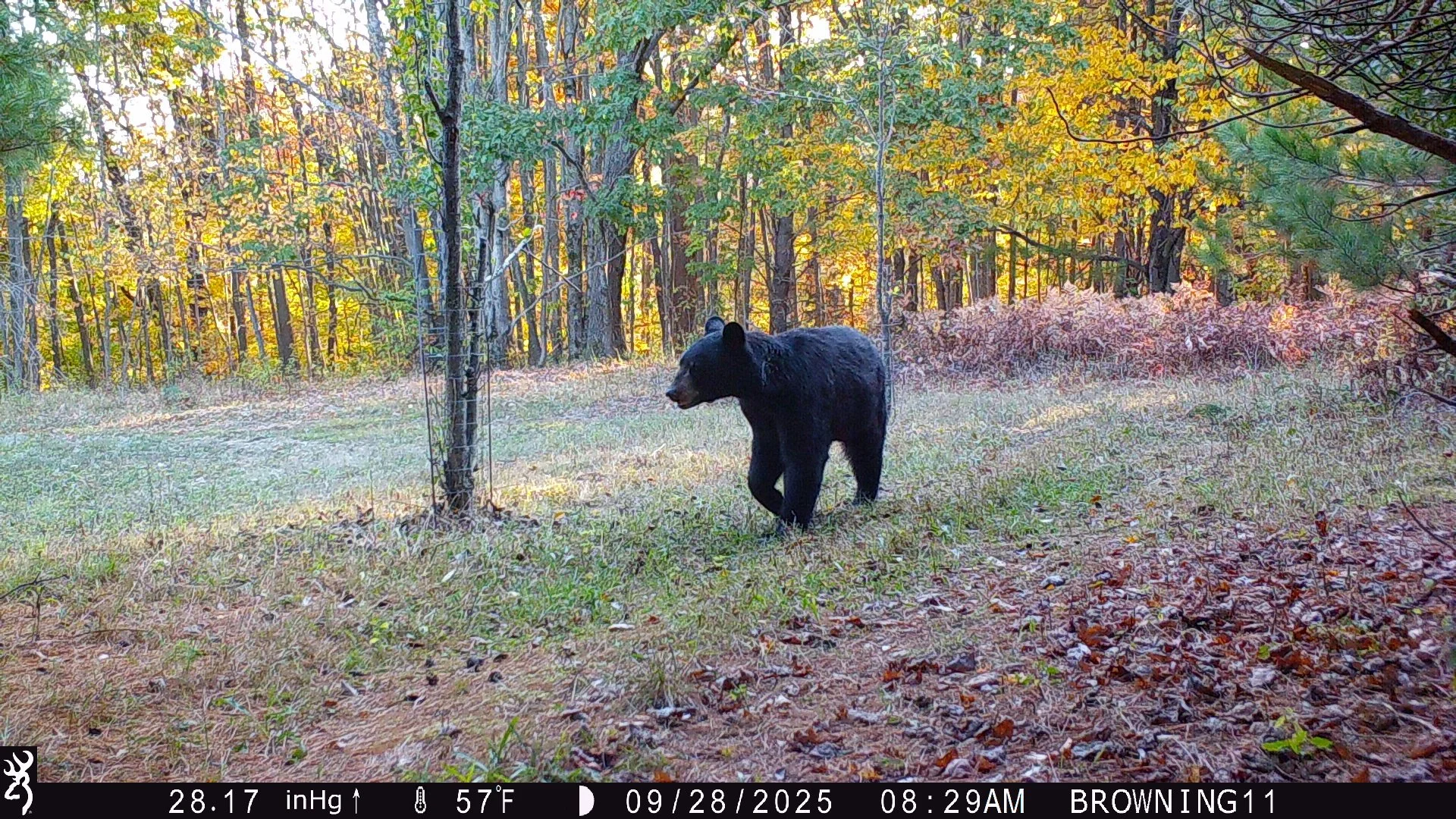
Black Bear: Thriving Where the Forest Is Deep
New York's black bear (Ursus americanus) population is healthy and growing, with bears now appearing in counties where they hadn't been seen for generations. But the Adirondacks remain the heart of the state's bear country, home to one of the larger bear populations in the Northeast.
Black bears are highly adaptable, but they are fundamentally forest animals. They need large, unbroken tracts for denning, foraging, and raising cubs. They require the kind of mast-producing hardwood forests, full of beechnuts and acorns, interspersed with wetlands and berry patches that the Adirondacks provide in abundance. Here, bears can live out full, largely undisturbed lives on the landscape's own terms.
As human development pushes into bear habitat elsewhere in New York, the Adirondacks become increasingly important as a source population, a place where bears breed successfully and disperse outward into surrounding areas.
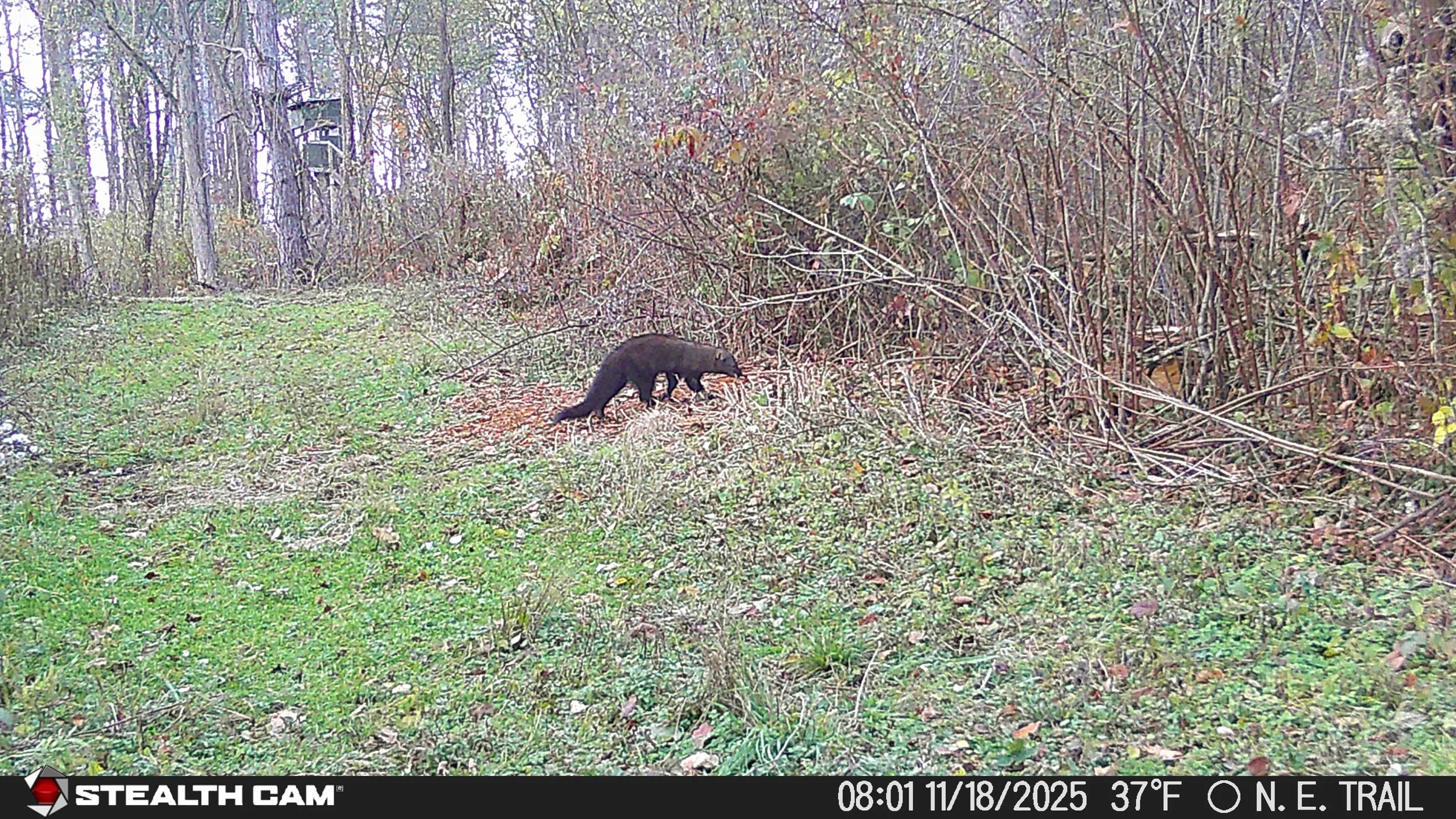
Fisher: The Forest's Top Pursuit Predator
The fisher (Pekania pennanti) is one of the most formidable predators in the Adirondacks relative to its size. Fishers are larger and more powerfully built than most of their weasel-family relatives. Males can weigh up to 13 pounds and stretch nearly three feet from nose to tail, built for speed and agility in dense forest, climbing trees, navigating deadfall, and pursuing prey through terrain that would stop most predators cold. They are the only predator known to regularly and successfully prey on porcupines, which they dispatch with a series of rapid bites to the face.
Like marten, fishers require mature, structurally complex forest. Unlike marten, they were able to persist in parts of New York through the 20th century and have since rebounded strongly. The Adirondacks support high fisher densities because the park offers everything the species needs: continuous old forest, abundant prey including hares and squirrels, hollow logs and tree cavities for denning, and vast territory free of the fragmentation that limits fisher populations elsewhere.
The Thread That Connects Them
Moose, marten, snowshoe hare, bobcat, bear, fisher. Each of these animals has a different story, different needs, different pressures. But they share one thing: they all depend on large, connected, intact forest. That is precisely what the Adirondacks provide, and precisely what makes this landscape so irreplaceable for wildlife in New York State.
As the pressures of climate change, development, and habitat fragmentation intensify across the Northeast, the Adirondacks stand as one of the last places where the full community of northern forest mammals can still live and interact as they always have. That's not something we can afford to take for granted.