
Why Long-Term Monitoring Matters
Wildlife populations are constantly changing, but those changes often happen slowly, quietly, and unevenly across the landscape. A single season of trail camera data can tell us who was present at a moment in time. Long-term monitoring, however, allows us to understand how wildlife communities change over years and even decades, why those changes might be happening, and what they mean for conservation and management.
Ecologists emphasize that long-term datasets are crucial for detecting meaningful ecological trends rather than short-term noise. Many ecological processes like gradual shifts in species abundance, cycles in reproduction, or responses to climate change, aren’t visible on short timelines and are only revealed through persistent sampling over time. Long-term data make it possible to separate short-lived fluctuations from real, directional change in ecosystems.
Research shows that decades of consistent monitoring can uncover emergent responses that short studies miss. For example, analyses of long-term plant productivity data revealed non-linear trends that only appeared after more than 20 years of observation, underscoring the power of long temporal records to improve predictive understanding of ecosystem responses. This is not to say that we always need 20+ years of data to detect trends, more so to point out that sometimes it takes multiple years for trends to emerge.
Long-term monitoring also enhances our ability to document how species respond to environmental change and to trace why those responses occur. A recent review in Journal of Animal Ecology highlights that long-term biodiversity monitoring is foundational for identifying meaningful trends in population dynamics and for establishing causal links between environmental drivers (like temperature, land use, or precipitation) and wildlife responses - critical knowledge for adaptive conservation strategies.
Why Snapshot NY Volunteers Matter
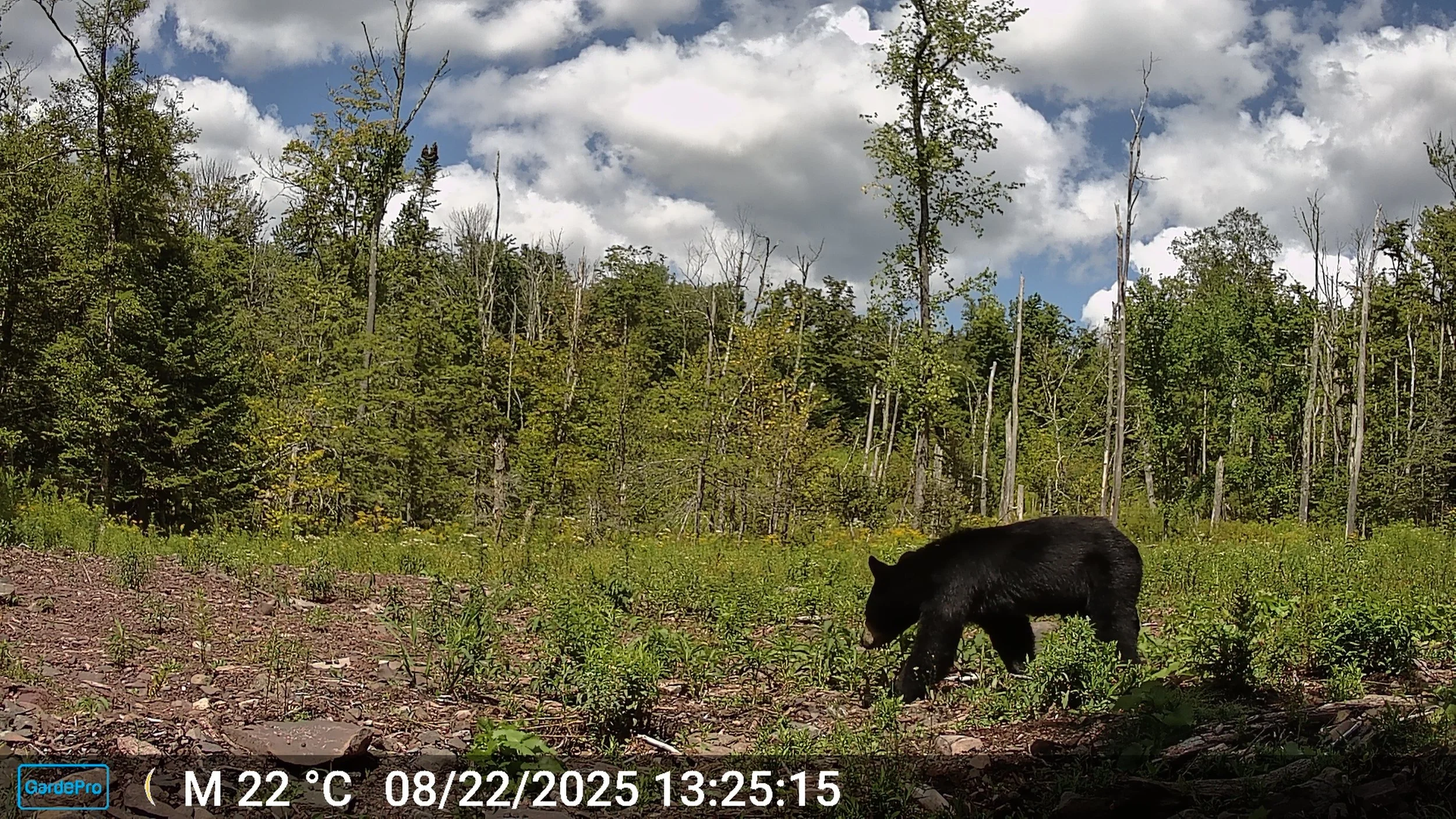
Snapshot NY is built to be a long-term monitoring project, and it simply wouldn’t be possible without volunteers who are willing to stay engaged over multiple seasons! Participants who continue to contribute data from their trail cameras provide something incredibly valuable: continuity. This continuity turns individual data points into long-term records that scientists can use to:
Distinguish true ecological trends from random variation
Detect gradual shifts in species distributions
Understand population changes in relation to environmental pressures
Inform management and conservation decisions based on evidence
Long-term monitoring programs across the world have shown that this kind of sustained data collection has often been essential for meaningful conservation action. In some cases, long-term research has revealed population declines or habitat changes that short-term studies would have missed, directly influencing how agencies manage species and ecosystems.
Because long-term wildlife monitoring is resource-intensive, many programs depend heavily on the dedication of volunteers and community scientists. Research has shown that community scientists can reliably contribute high-quality long-term data and that such collaborations help sustain monitoring efforts that might otherwise falter due to funding or resource challenges.
Another very important benefit of long-term monitoring in regards to citizen science based projects is that the citizen scientists themselves improve on their data collection and reporting techniques the longer they are involved in a project! While our minimum participation time is 2 months, if you are willing and able - please continue to be a part of Snapshot NY for as long as possible!
As always,
Thank you to everyone who continues to participate in the Snapshot NY project!
-The Snapshot NY Team
Sources:
Cunha, D. G. F., J. F. Marques, J. C. D. Resende, P. B. D. Falco, C. M. D. Souza, and S. A. Loiselle. 2017. Citizen science participation in research in the environmental sciences: key factors related to projects’ success and longevity. Anais da Academia Brasileira de Ciências 89:2229–2245.
Estes-Zumpf, W., B. Addis, B. Marsicek, M. Lee, Z. Nelson, and M. Murphy. 2022. Improving sustainability of long-term amphibian monitoring: The value of collaboration and community science for indicator species management. Ecological Indicators 134:108451.
Le, V. H., S. L. Collins, and R. Vargas. 2025. Long-term ecological studies must continue: insights from a dryland transition zone. Oecologia 207:171.
Zipkin, E. F., and P. J. Williams. 2025. Revealing species responses to environmental change through long-term data and mechanistic frameworks. The Journal of Animal Ecology 94:2155–2158.