
Feeling the love: Mammals who mate for life
As the ‘month of love’ comes to an end, let’s take a look at some mammals that truly commit.
When we think about lifelong partnerships, mammals aren’t always the first animals that come to mind. About 3 to 5% of mammals are known to be socially monogamous, meaning they select one mate and stay with them for life. Many species have brief mating encounters or switch partners from year to year. But some mammals do form long-term pair bonds, sticking together across breeding seasons, raising young as a team, and even defending territory side by side.
Here in New York, a handful of mammals show us that long-term commitment isn’t just for humans and swans.
Eastern Coyote
Coyotes are one of the best-known examples of monogamy among North American mammals. Breeding pairs typically form strong, long-term bonds and often remain together for life. Both parents play an active role in raising pups, hunting, guarding the den, and teaching young coyotes how to survive. Many “monogamous” animals “cheat” on occasion, or do what biologists call “extra-pair copulations.” This doesn’t really seem to be the case for coyotes. A study published in 2012 in the Journal of Mammalogy found that out of the 236 coyotes they captured, none showed genetic evidence of polygamy. Social monogamy is rare in mammals, but genetic monogamy is even more rare! The study also observed some grieving behavior at the loss of a mate. Read more here: https://www.nationalgeographic.com/animals/article/coyote-love-grief-science and https://academic.oup.com/jmammal/article/93/3/732/837894?login=true
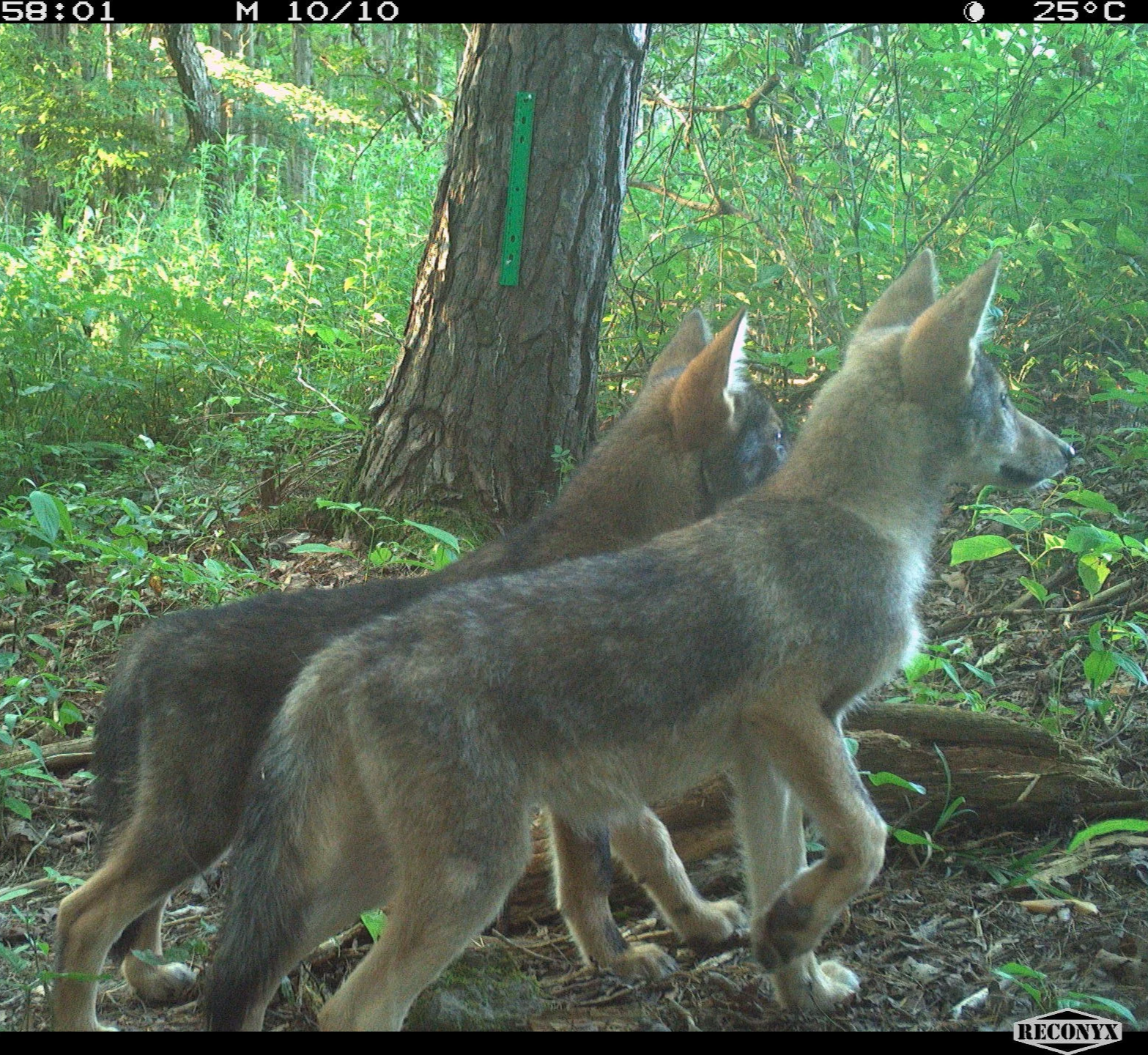
Coyotes dedicated partnerships are a big reason why they are so adaptable and successful, even in human-dominated landscapes. In Snapshot NY camera data, coyotes can be detected traveling in pairs, especially during the breeding season, offering a glimpse into these tight family units. Sometimes we even get the pups on camera!

North American Beaver
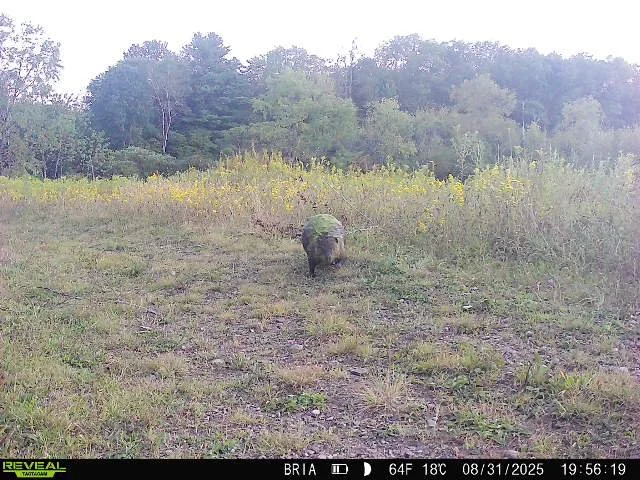
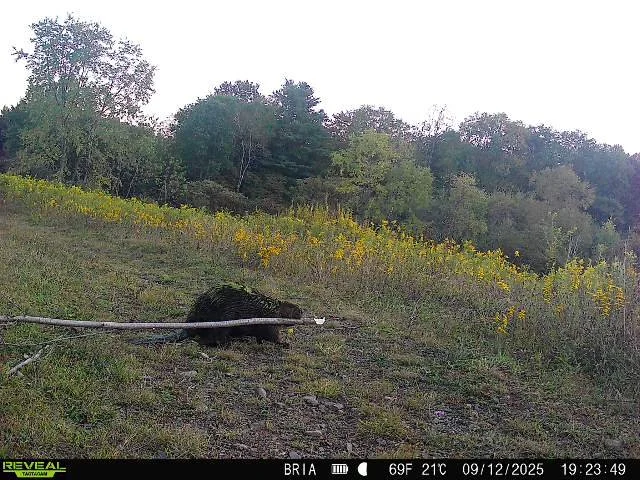
Beavers are another classic example of lifelong monogamy. Beaver families that share a lodge are called colonies and typically consist of 6-7 beavers: an adult breeding pair, their kits, and other offspring up to two years old. At age 2, kits leave the colony to find a mate, a new pond, and build their own lodge. It take a lot of work to build and maintain a lodge, and thus a tight nit family group is beneficial for dividing the labor. The offspring assist in gathering food and building food caches, gathering building supplies, patching the lodge with mud, and digging channels.
In winter, beaver bonds become even more important. Paired adults remain in the lodge together, relying on stored woody vegetation cached underwater in the fall. Their shared labor earlier in the year directly determines whether the family survives the cold months. It truly does take a village!
Adult beavers stay together even after the kits leave the lodge, and the pairings last the lifespan of beavers – as much as 10-15 years! Beavers will find a new mate if one dies but will first observe a “mourning period” and wait some time before pairing up again.
Seeing a beaver pair on camera can be especially meaningful, as it often indicates a stable, long-established wetland system. Side note - did you know that New York State’s official mammal is the North American beaver?
Red Fox
Red foxes are generally monogamous and stay with the same mate for life - but it’s safe to say there is some nuance here. For most mammals, monogamy is contingent on the availability of resources and the density of individuals within their population range. When population densities are lower, red fox are more likely to be monogamous - whereas when the population densities are higher, males are less likely to stay with the same partner. Red foxes are commonly described as socially monogamous, meaning a male and female form a breeding pair and maintain a shared territory, often for multiple years. While genetics sometimes tell a more complicated story, their day-to-day behavior reflects strong partnership and cooperation.
A red fox pair typically shares a territory and defends it together year round, often coordinating movements and hunting. They will also den together during the breeding season. Males will usually help raise pups by bringing the female food while she stays in the den guarding the pups. Sometimes a sister or older daughter will also help raise the pups. This most commonly happens when a daughter from the previous litter stays to help and learn how to raise pups before finding a mate of her own. These “helper foxes” assist with food delivery and den defense, increasing kit survival. There are also cases of males having multiple mates who actually raise their litters together in the same den!
Although red foxes often behave monogamously, genetic studies show that extra-pair mating can occur, and a single territory may occasionally include more than one breeding female. This doesn’t weaken the importance of the pair bond, but highlights that fox social systems are flexible and adaptive, responding to food availability, population density, and habitat quality.
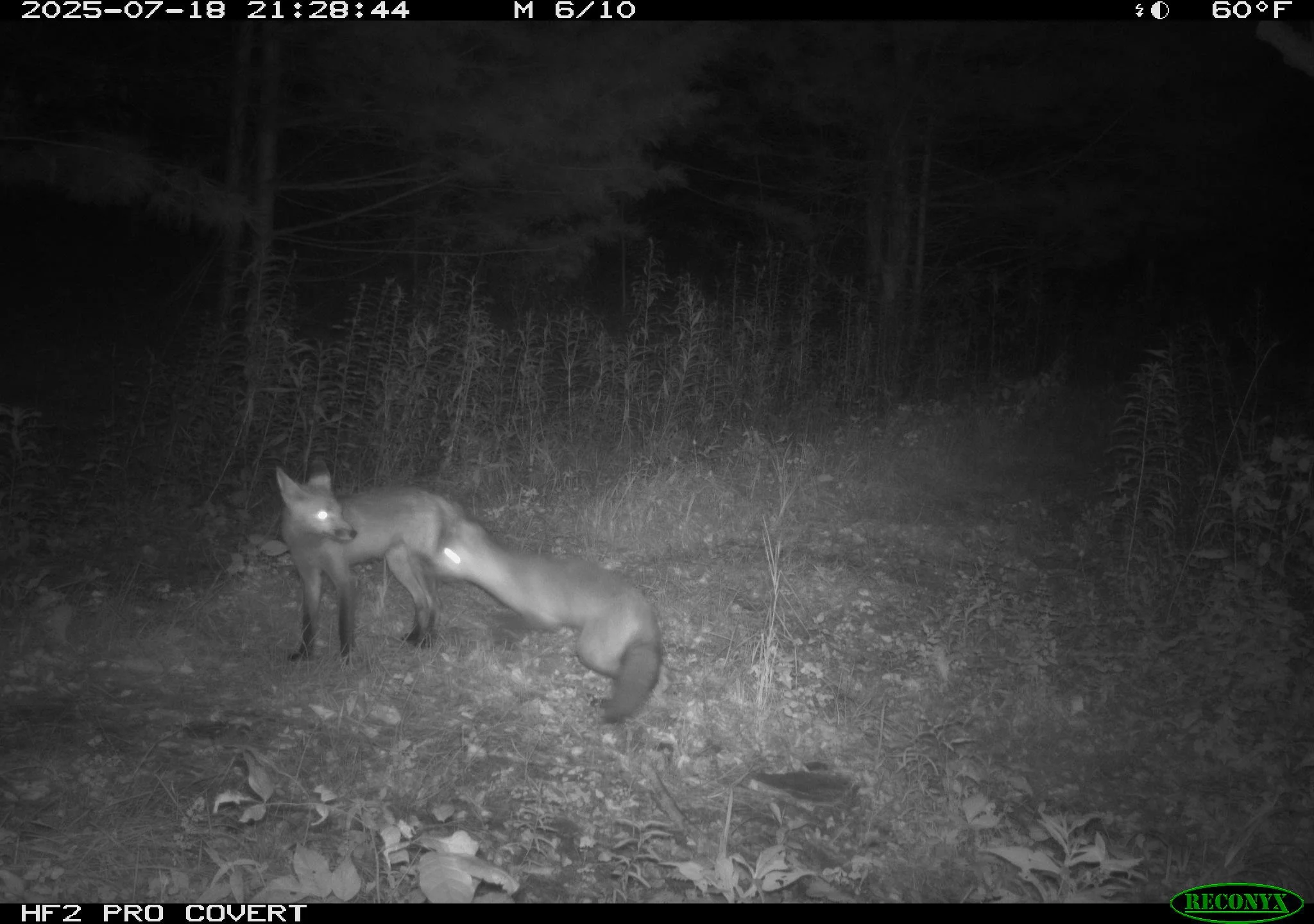
Seeing two foxes consistently using the same area across months or years is often a strong indicator of a bonded pair. This is where trail cameras are particularly helpful! Long-term camera data can help us see single fox sightings, a stable pair using a territory, and family groups returning year after year.
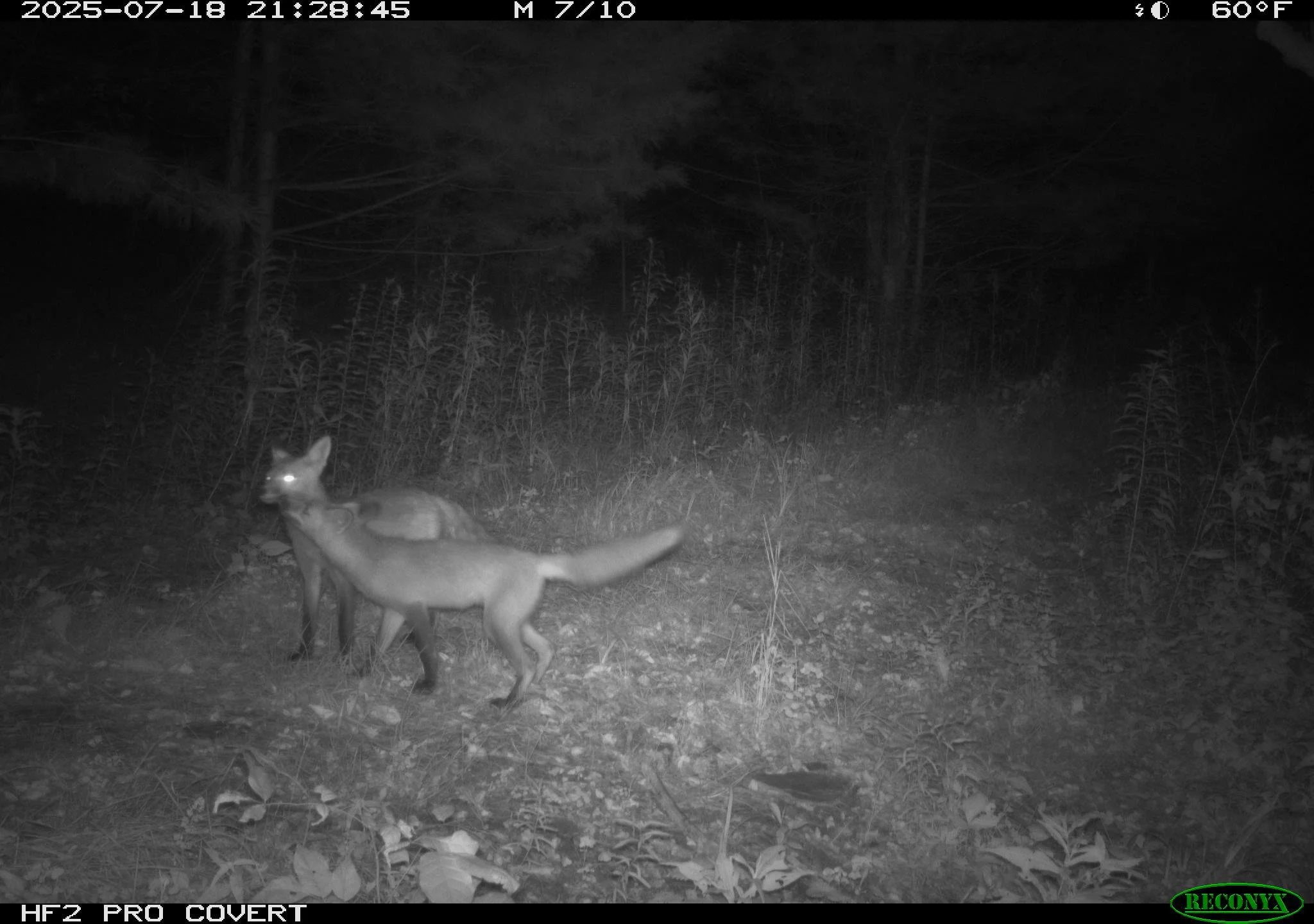
Across New York, mammals show that partnership and cooperation can take many forms. Coyotes form long-term breeding pairs, working together to defend territory and raise pups year after year. Beavers are one of the clearest examples of lifelong monogamy, with mated pairs cooperating for years to build dams, maintain lodges, and raise multiple generations, shaping entire ecosystems along the way. Red foxes typically form socially monogamous pairs, sharing territory and parental duties, even though their family structure can be flexible. Together, these species highlight how long-term bonds, whether strict or adaptable, play a key role in helping wildlife survive and thrive across New York’s landscapes.