
Beyond Snapshot NY’s Trail Cameras: Other Mammal ID Techniques
If you've spent any time scrolling through trail camera photos, you know the feeling: a blurry, backlit shape trips the sensor at 2 a.m., and now you're squinting at grainy pixels trying to decide if you're looking at a fisher or a mink. We know the frustration! It is usually pretty easy to identify animals in trail cameras images, but that is not always the case. Camera trapping has become one of our most powerful tools for surveying mammals. It's non-invasive, works around the clock, and lets us monitor species that are otherwise nearly impossible to see. But a photo is only useful if we can correctly identify what's in it.
For Snapshot NY, our identification toolkit is relatively simple: trail camera photos are classified with the help of a machine learning model called DeepFaune New England, and a portion of images are reviewed by wildlife experts. This process is what allows us to monitor mammals across an area as large as New York State. But camera trapping is just one piece of a much bigger mammal-ID toolbox that wildlife researchers rely on. For some mammals, more rigorous methods of identification are necessary. Let’s go over some of these techniques!
The First Line of Evidence: The Photo Itself
Most of the time, a trail camera photo is enough. A black bear ambling past, a white-tailed deer with velvet antlers, a red fox trotting through snow. These are usually unmistakable. But plenty of species come in look-alike pairs or trios that can stump even experienced reviewers, especially with a partial body, bad lighting, or motion blur.
A classic example is weasels. Short-tailed weasels (ermine) and long-tailed weasels are nearly identical in color and shape, and without a clear, well-lit view of body proportions or that telltale tail length relative to the body, a single frame often isn't enough to call it confidently. Other tricky pairs include coyotes versus domestic/hybrid dogs, gray vs red fox, or fishers vs large mink. In these cases, we lean on sequences of photos rather than a single frame, looking for behavior, gait, and multiple angles that build a stronger case than one image could give us.
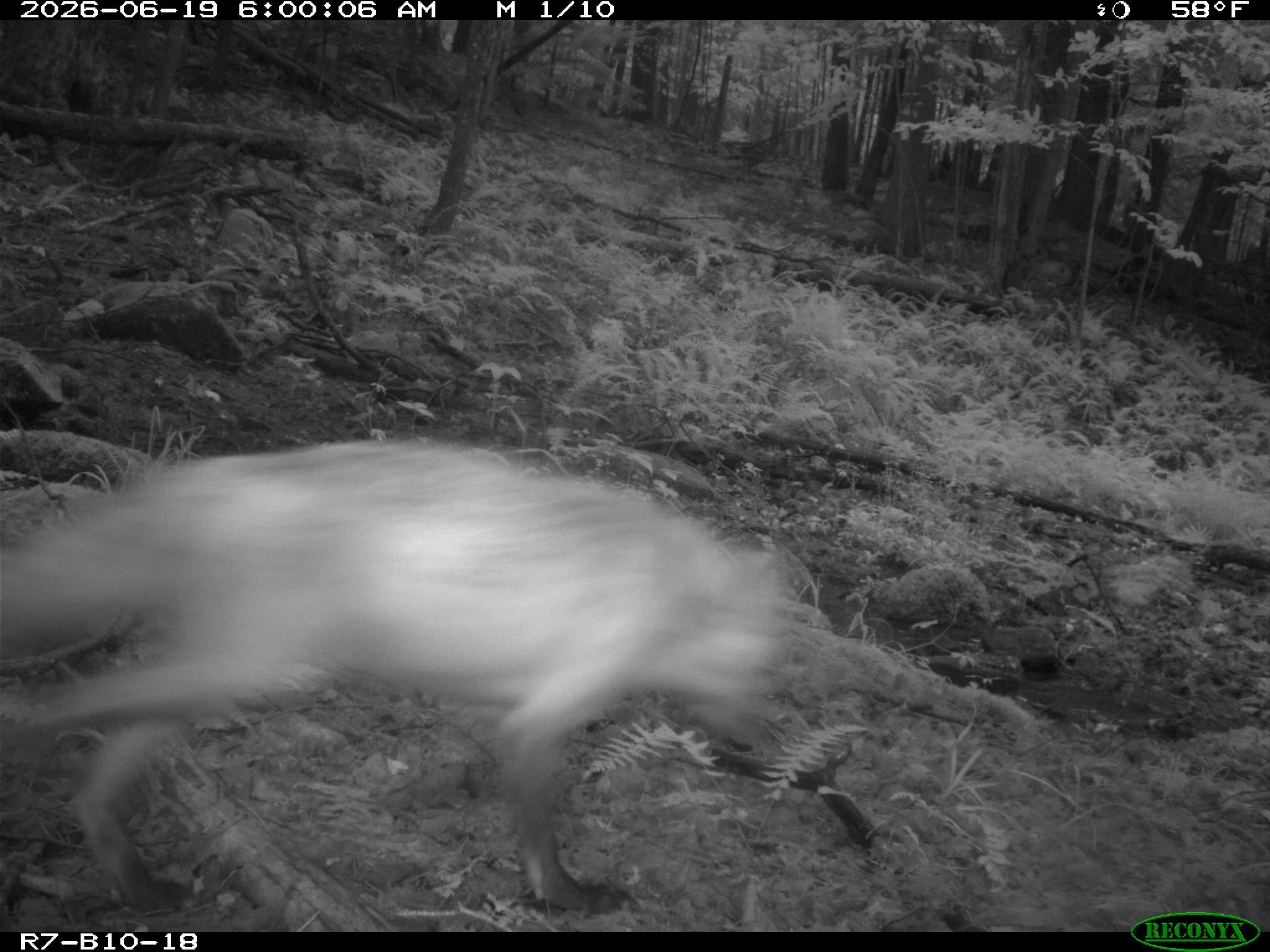
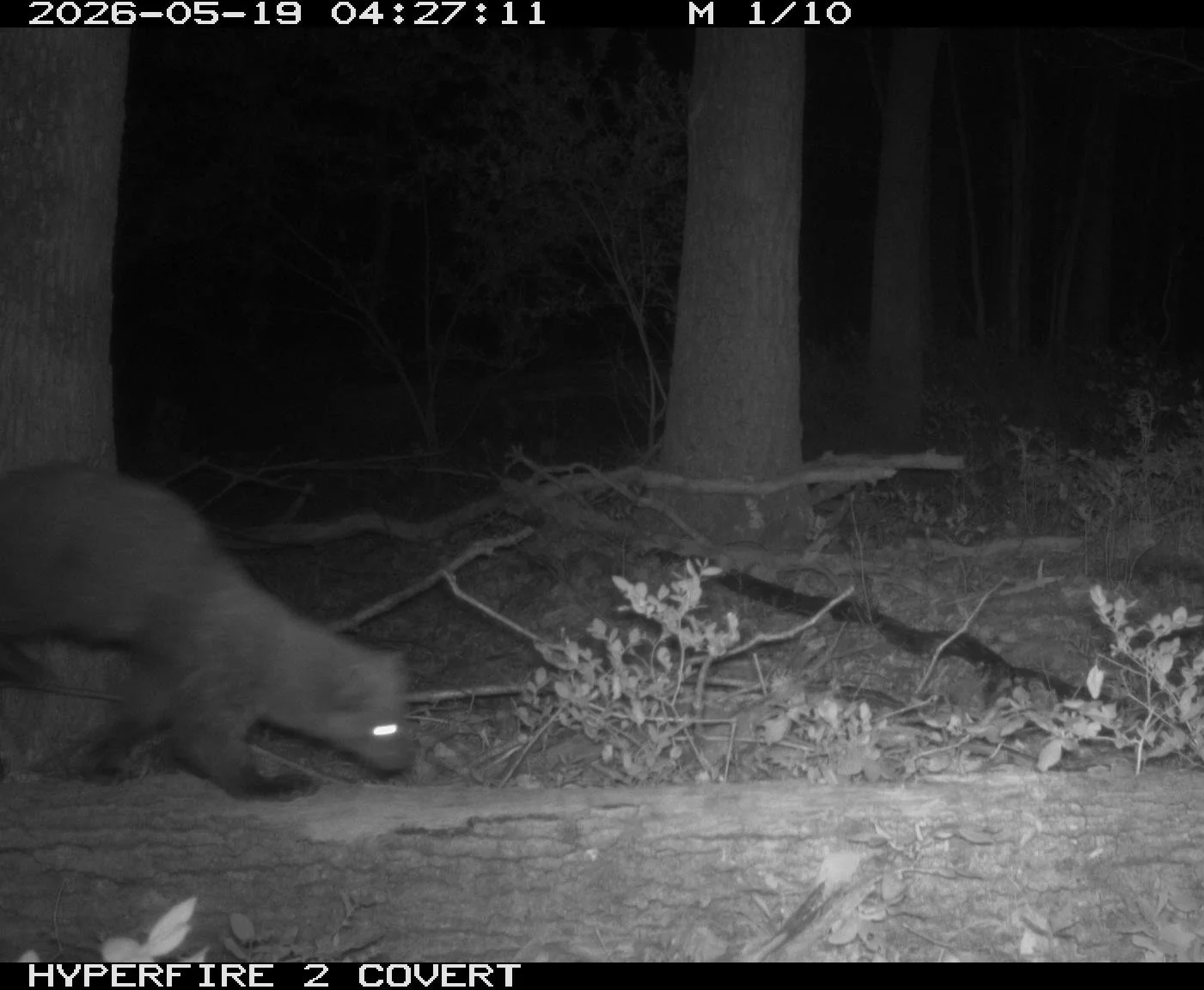
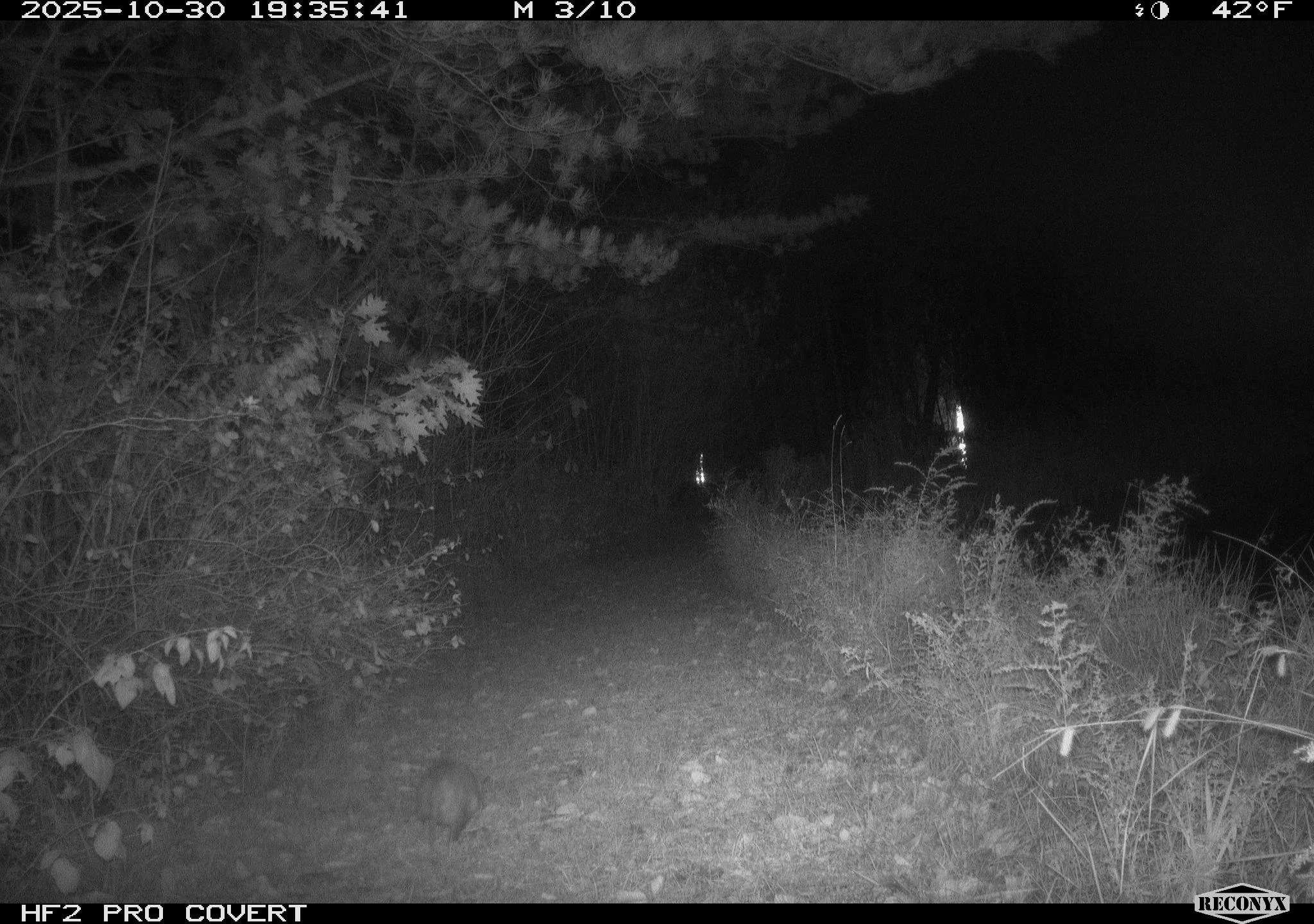
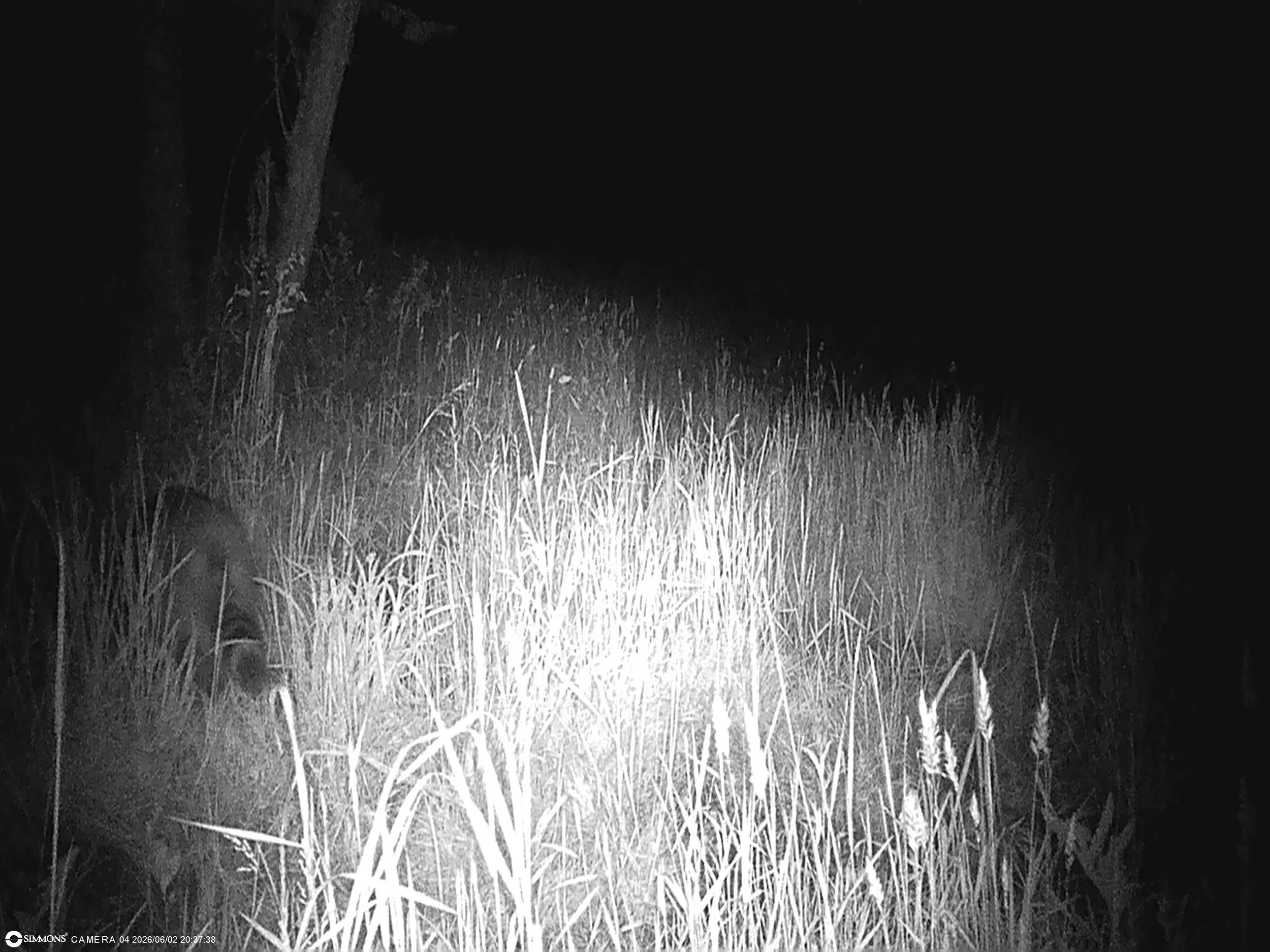
Sometimes we get images like the ones below. Blurry, grainy, half bodies, and dark blobs. In these cases, context is key! It takes a lot of practice to start to identify these unclear images, and sometimes, we just have to throw our hands up and say “I don’t know!”
Bringing in the Machines: DeepFaune New England
Sorting through thousands…sometimes millions of trail camera images by hand is one of the biggest bottlenecks in camera trap research, so we use DeepFaune New England (DFNE), a machine learning model built specifically for our region. Developed by USGS researchers and collaborators, DFNE was adapted from the original DeepFaune model, which was trained on European wildlife, and fine-tuned on trail camera data from northeastern North America. It can automatically classify 24 taxa from northeastern North America with about 97% accuracy, and because it was built for this specific region, it captures species combinations and image conditions that more generic, continent-wide models might miss.
The way it works: the model takes a cropped image of an animal generated by an object detection step that finds the animal in the frame and classifies which species it's most likely to be. It doesn't totally replace human judgment so much as speed it up dramatically, flagging likely species so reviewers can focus their attention where it's needed most (like those tricky weasel photos).
Trail camera photos and DeepFaune New England are where Snapshot NY's identification work begins and ends. But it's worth knowing what else is out there, since these other techniques are often used by researchers working alongside or in addition to camera trap studies, sometimes to confirm a species that's hard to call from a photo, and sometimes to answer questions a camera simply can't.
Beyond the Camera: Other Ways Researchers ID Mammals
Camera traps capture a moment in time, but animals leave evidence of their presence long after they've walked out of frame. Reading that evidence is a whole discipline of its own, and it's a common complement to camera trap research even though it isn't part of the Snapshot NY project.
Scat is one of the most reliable clues in the field. Size, shape, contents, and placement can narrow down a species quickly, and scat left near a camera can help confirm an ID from a fuzzy photo.
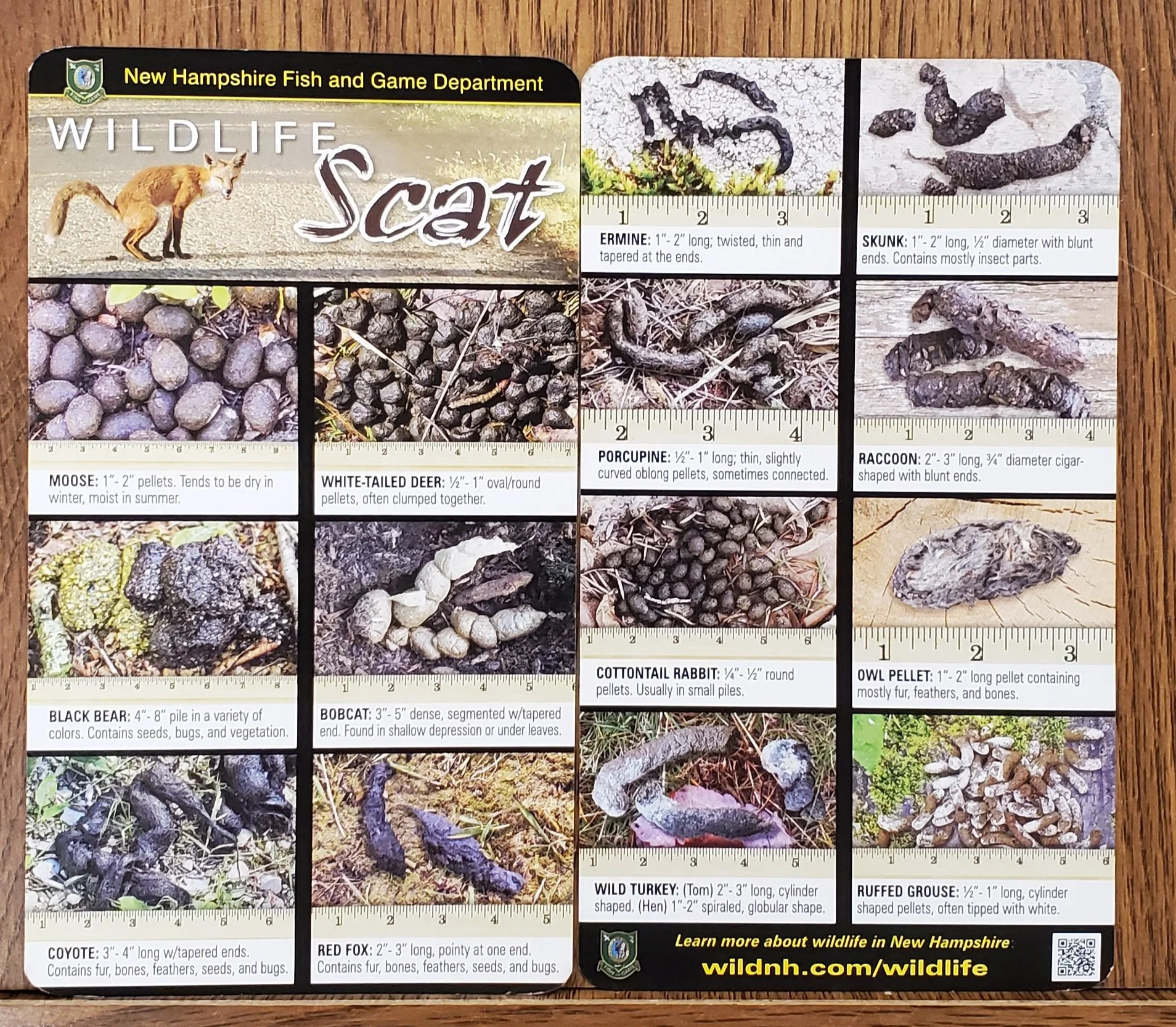
Credit: New Hampshire Fish and Wildlife
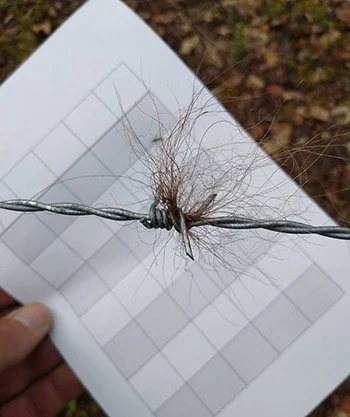
Fur is another great confirmation tool! Researchers set out wire brushes or barbed hair snares at scent stations which lets animals leave a small tuft of fur behind as they rub or pass through. That fur can then be examined for color and texture, or sent off for genetic analysis (more on that below).
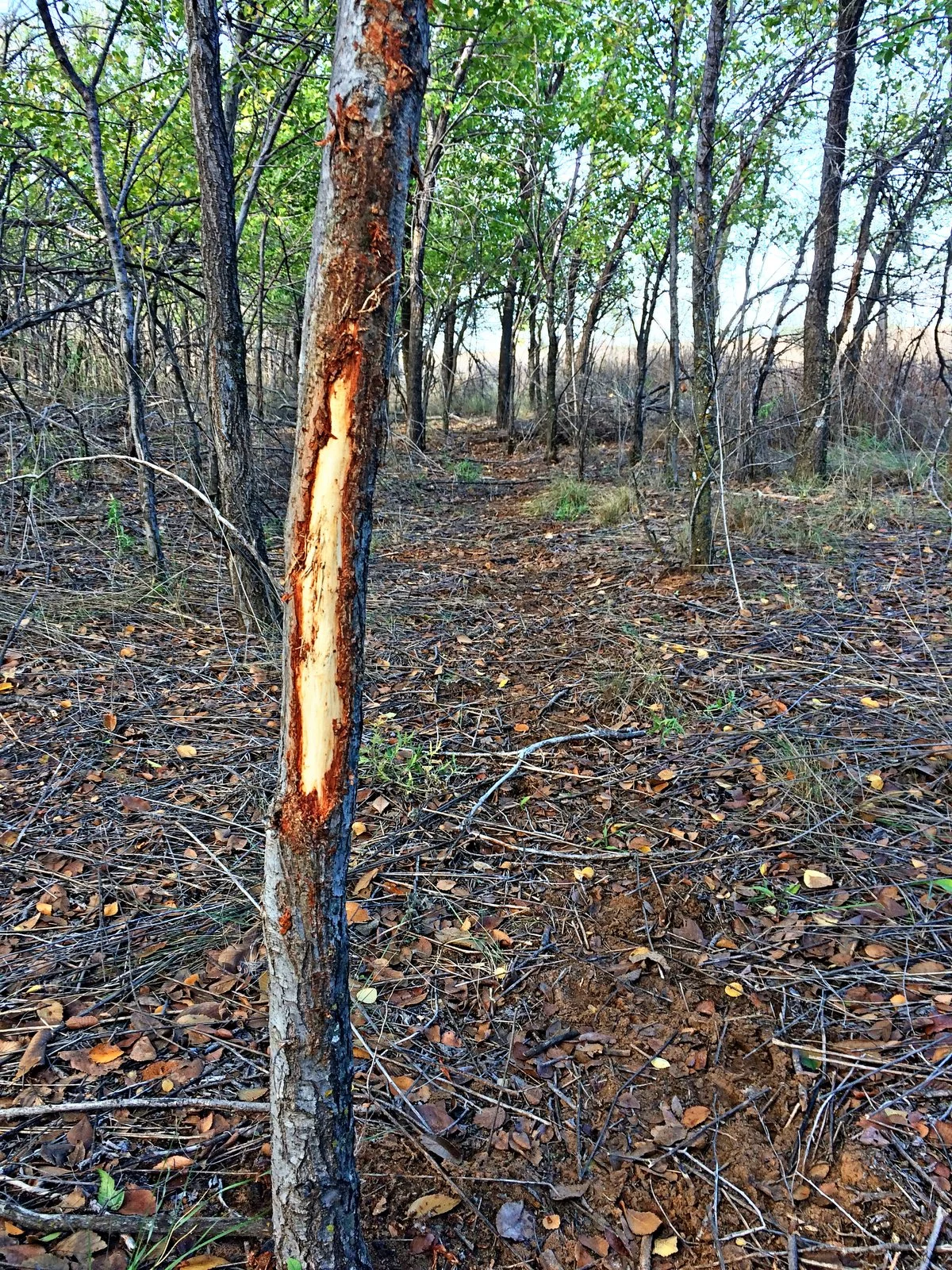
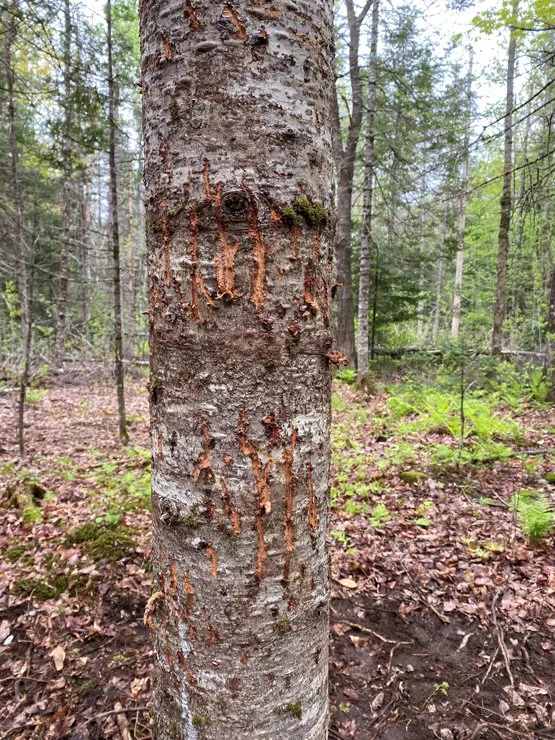
Sign on the landscape tells its own story. Deer rubs (where bucks scrape antler velvet and mark territory on saplings) are an unmistakable sign of white-tailed deer activity, even when no deer has ever crossed a camera's field of view nearby. Claw marks on trees, especially the deep gouges left by black bears climbing or marking territory, are another strong indicator of presence.
And of course, tracks in mud, sand, or snow remain one of the oldest and most dependable ID tools available, especially for confirming the presence of elusive or nocturnal species.
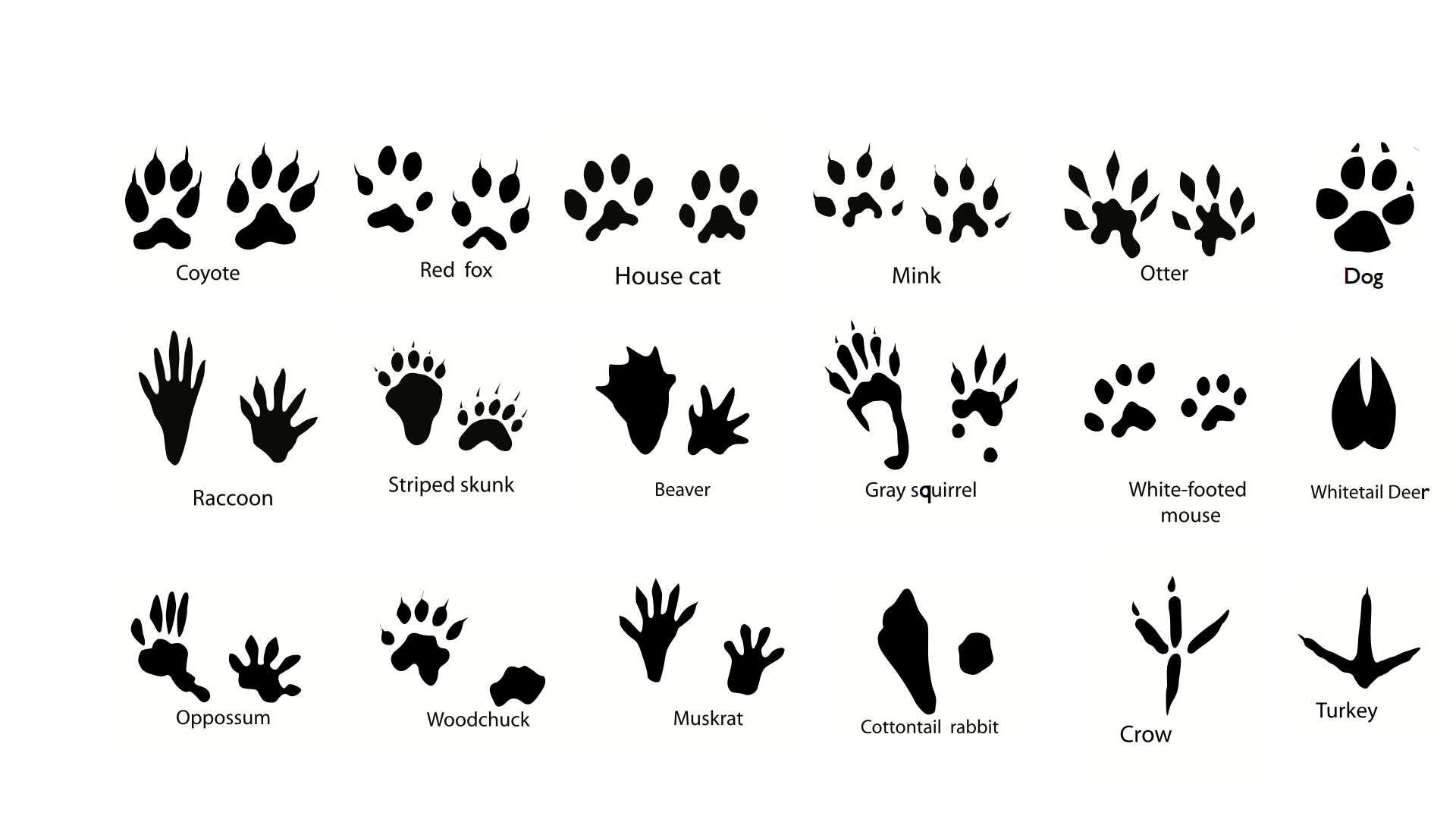
Learn more about mammal tracks here: chrome-extension://efaidnbmnnnibpcajpcglclefindmkaj/https://extapps.dec.ny.gov/docs/administration_pdf/tracks1.pdf
When It Really Matters: DNA Analysis
For the trickiest cases where species that are visually near-identical, or when we need absolute certainty for research or monitoring purposes, we turn to DNA analysis. Fur samples, scat, or other genetic material can be sent to a lab for species-level (and sometimes individual-level) identification. This is the gold standard when it comes to distinguishing genuinely cryptic species or confirming a rare or unexpected detection.
Given everything above, you might wonder why Snapshot NY doesn't incorporate scat surveys, fur collection, or DNA work into the project. The answer comes down to scale. Snapshot NY's goal is landscape-scale, multi-species monitoring across the entire state of New York — tracking population trends over time so that this data can inform conservation and management decisions statewide. Achieving that kind of coverage means we need a method that can be deployed consistently across hundreds of sites, run continuously for months at a time, and generate data that can be processed efficiently even as the number of photos grows into the millions. Trail cameras, paired with a regional tool like DeepFaune New England, are uniquely suited to that job: they're relatively inexpensive, they work around the clock without a person present, and they let us monitor dozens of species simultaneously with a single, consistent method.
Techniques like scat surveys, fur snares, and DNA analysis are powerful, but they tend to be labor and resource intensive at the scale Snapshot NY operates on, which is exactly why they're better suited to targeted, smaller-scale studies rather than statewide monitoring. That's also why they're such a great complement to camera trap projects like ours - when a research question calls for that extra level of certainty or detail, those tools can be brought in to work alongside the camera data.
In summary, there are many different ways we can ID mammals, beyond visually seeing an individual in person or on camera. Hopefully through Snapshot NY, you are becoming an expert at ID-ing the mammals in your trail camera photos!